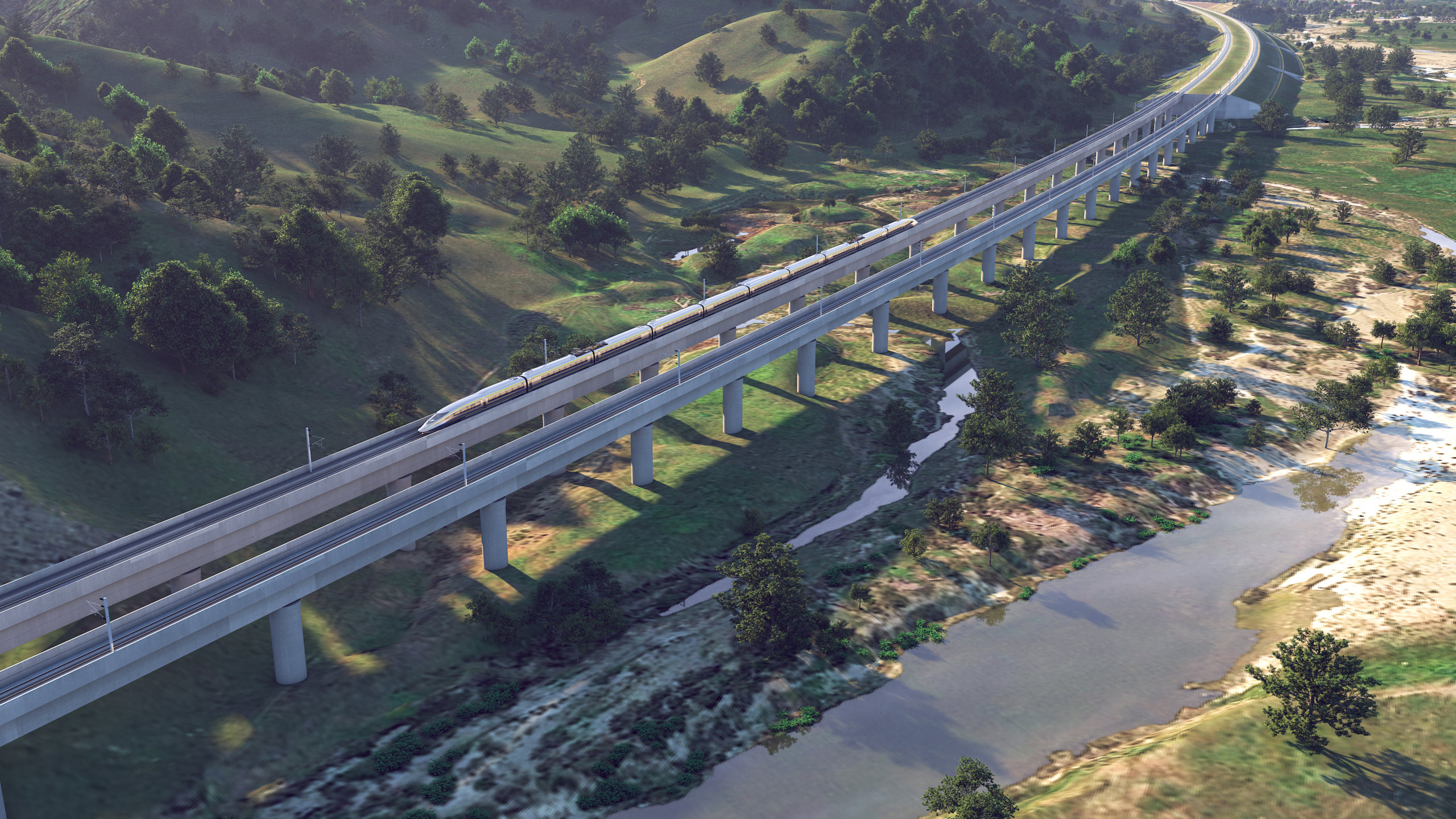
India is developing a standardised delivery model for future high-speed rail projects, drawing on lessons learned from the Mumbai–Ahmedabad High-Speed Rail (MAHSR) corridor, as construction of the country’s first bullet train line continues.
The Indian government has said that the MAHSR project is being used as a template that will support the delivery of future high-speed rail corridors through common engineering designs, construction methods and operational practices.
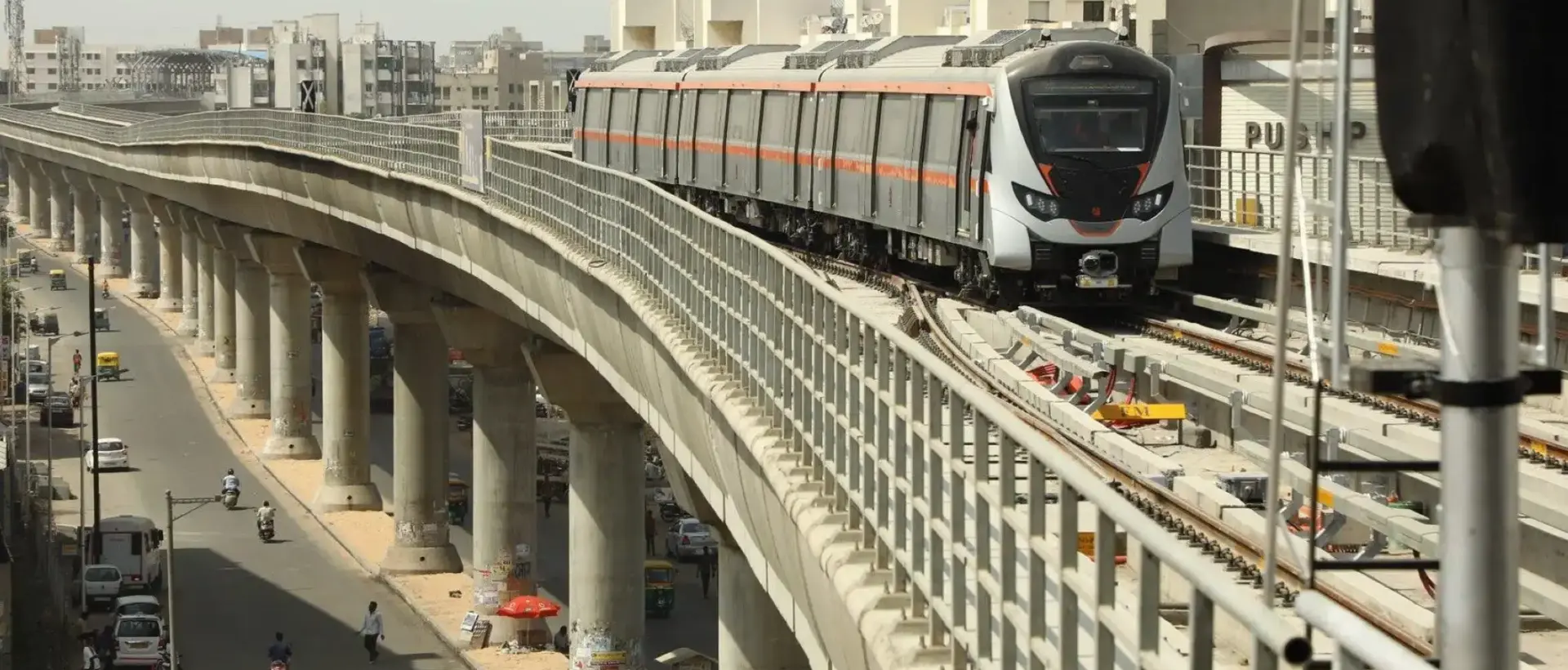
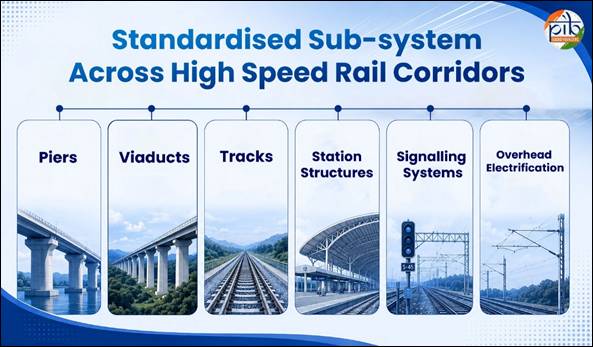
The approach will standardise key infrastructure elements including piers, viaducts, track systems, station structures, overhead electrification and signalling, while allowing foundations to be adapted to local ground conditions. This is intended to simplify procurement, maintenance and staff training, while reducing costs and supporting faster project delivery across future schemes.
The MAHSR corridor, which is being built using Japanese Shinkansen technology, will connect Mumbai and Ahmedabad over approximately 508km with 12 stations. The line has a design speed of 350km/h and an operational speed of 320km/h.
The first passenger services are expected to begin in August 2027 on the initial section between Surat and Vapi, with the full journey between Mumbai and Ahmedabad expected to take around one hour and 58 minutes.
The project also marks the introduction of several technologies to India’s railway network, including J-Slab ballastless track, a 2×25kV overhead electrification system based on Shinkansen designs and dedicated track construction bases for assembling and installing rail infrastructure.
Infrastructure planned for the corridor includes more than 20,000 overhead line masts, 12 traction substations, two depot traction substations, 16 distribution substations and three rolling stock depots located at Sabarmati, Surat and Thane.
Alongside infrastructure development, the government has announced it is expanding domestic manufacturing capability for high-speed rail under its Make in India and Aatmanirbhar Bharat initiatives.
Integral Coach Factory (ICF) and Bharat Earth Movers Limited (BEML) are jointly developing indigenous high-speed trainsets designed to operate at up to 280km/h. Indian companies are also increasing production of specialist components, slab track systems and construction equipment for future projects.
The government added that research by the Indian Institutes of Technology (IITs), specialist training programmes and the adoption of Japanese engineering practices are contributing to the country’s growing high-speed rail expertise.
Beyond the Mumbai–Ahmedabad line, India has identified seven proposed high-speed rail corridors covering almost 4,000km, representing an estimated investment of around ₹16 lakh crore (166 billion USD).
The proposed routes include:
- Delhi–Varanasi
- Varanasi–Patna–Siliguri
- Chennai–Bengaluru
- Bengaluru–Hyderabad
- Chennai–Hyderabad
- Mumbai–Pune
- Pune–Hyderabad
The standardised approach being developed through the MAHSR project is intended to provide a scalable framework for the delivery of these future corridors, supporting shorter journey times and the expansion of a national high-speed rail network.