A Great Western Railway (GWR) battery-electric train has set a new world distance record of 200 miles, the furthest distance travelled by a train of its kind on a single charge.
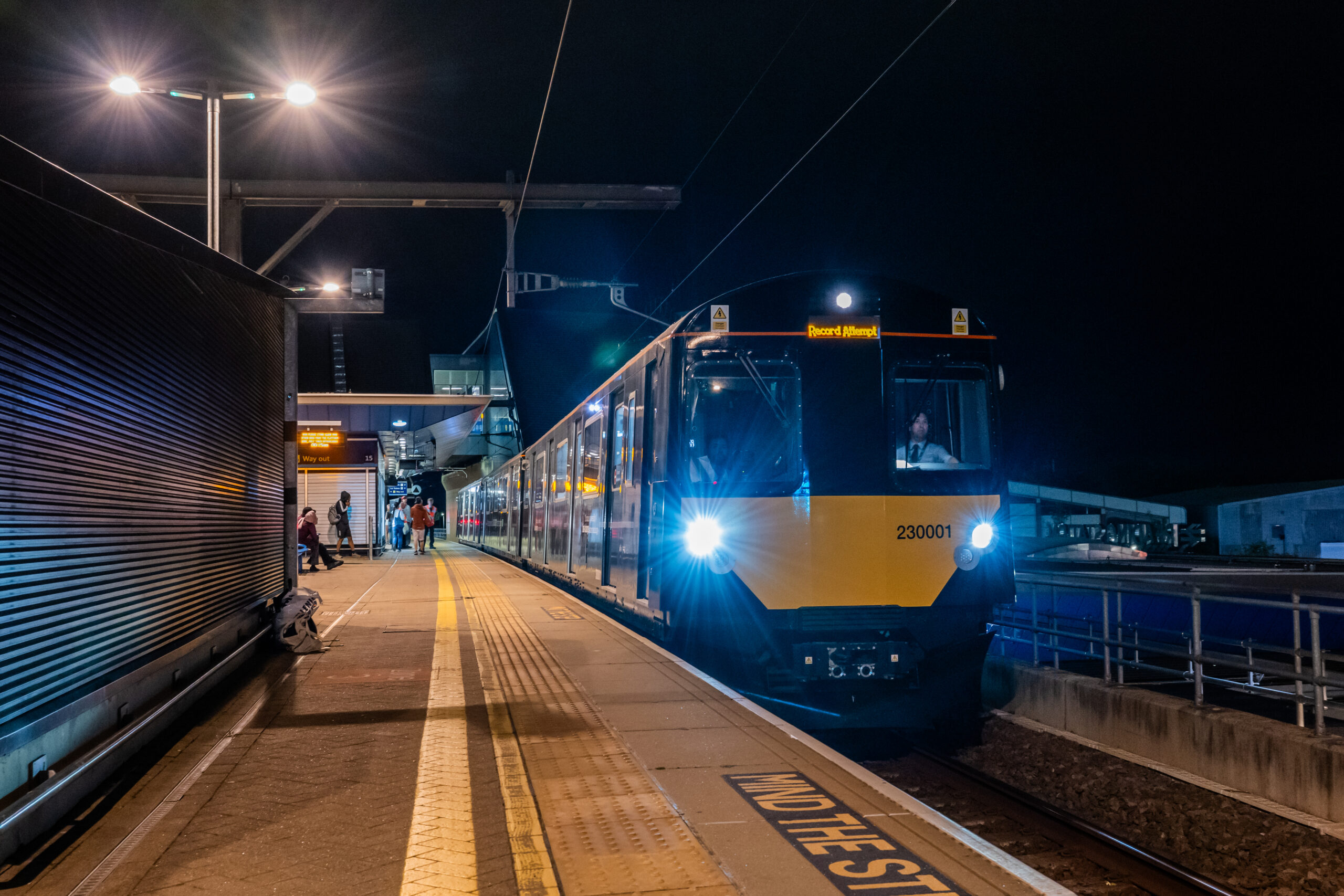
The trip, which was taken to commemorate Railway 200 celebrations, started at the Reading Train Care Depot and travelled to Paddington twice, as well as Oxford.
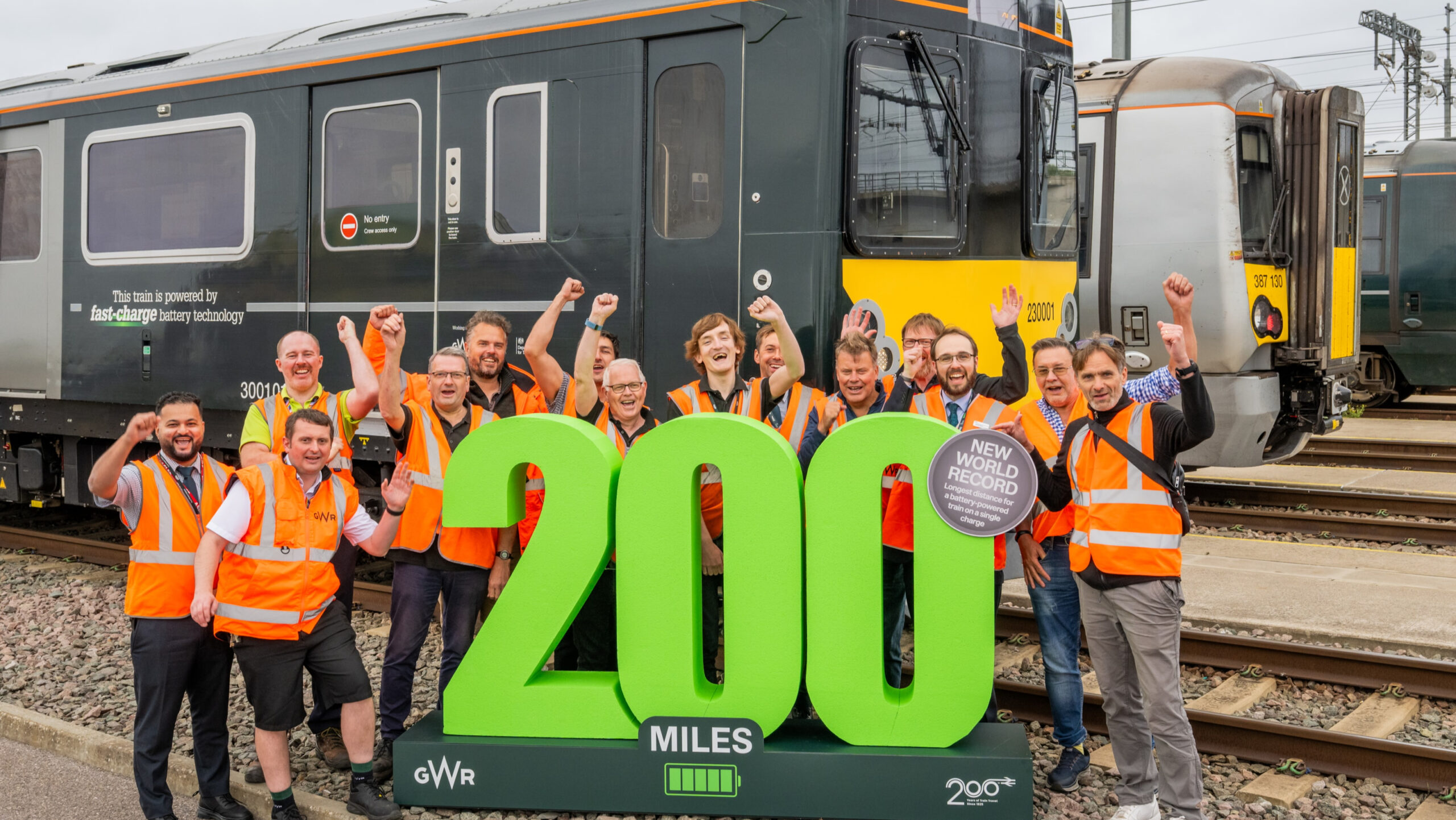
The previous record of 139 miles was achieved by Stadler Deutschland in Berlin in 2021.
The event was recorded and verified by officials from the Rail Performance Society, who were on board to witness the record’s completion.
Rail Performance Society Vice Chair, Nigel Smedley, said:We can confirm that, subject to final checks, the Great Western Railway Class 230 train travelled 200 miles on a return journey from Reading Train Care Depot without charging its batteries from any external energy source.
Previously used for GWR’s trial of fast-charge technology on the Greenford branch line over the course of the past year, the train in question was a Class 230, number 230001, to be exact.
GWR recently released a new White Paper which outlines the findings of the trial, aiming to prove that battery trains are capable of providing both a viable and cost-effective alternative to diesel trains.
The operator’s current fleet is expected to exceed serviceable use some time over the next 7-10 years, with GWR now planning to further utilise battery trains in the future.
GWR Engineering Director, Dr Simon Green, said:We’re delighted to set a new world record - and to reach 200 miles in such a landmark year for the rail industry is the icing on the cake. It’s a real tribute to colleagues at GWR and Network Rail who have worked so hard on developing fast-charge technology.
Today’s record attempt has been a bit of fun, but it also underlines a serious point: investment in battery technology is essential as we look to replace our ageing diesel fleet.
Overhead lines will remain the first choice to power electric trains, but where that isn’t possible or desirable, battery technology like this offers a reliable and efficient alternative to bridge the gap.
As part of our future rolling stock plans we’ll need battery trains to routinely cover over 60 miles between charges - and today’s achievement provides clear evidence that this is a viable and exciting solution for the future of our railway.