A new internal audit commissioned by Deutsche Bahn (DB) CEO Evelyn Palla has revealed a range of significant shortcomings with regards to the Stuttgart 21 project.
The report has highlighted deficiencies in planning, control and risk management, with the existing process management proving, according to the audit, ‘insufficient to safely manage a major project of this complexity’.
In order to address the issues; DB has stated it will begin the reorganisation of current personnel, as well as a revision of all future management of the project.
At the same time, DB has also revised the commissioning plan, with the project now set to be launched in stages between 2027 and 2033.
The Group Audit identified a number of deficiencies and areas for improvements, with the original commissioning date of the end of 2026 now deemed ‘unrealistic’ based on today’s perspective due to both underlying assumptions and the identified risks.
Pointing specifically to organisational shortcoming in both processes and controls, the report found inadequate coordination at key interfaces, as well as strong potential for improvement in proactive management.
DB CEO Evelyn Palla said:To put it bluntly: I am appalled by the results of the group audit.
The results are not only appalling to me, but also to the public, especially the people of Stuttgart and all railway employees who give their best for our customers every day.
Based on the audit report’s findings (as well as a more in-depth review of the project planning), the new management team at DB Projekt Stuttgart-Ulm GmbH (PSU) has developed an updated phased plan with stages from December 2027 to 2033, with travel improvements expected for passengers in Stuttgart as early as 2027, with commuters set to benefit from shortened routes through the Bonatz building and across the roof of the through station.
The new project plan also takes interrelationships between Stuttgart 21 and a number of associated projects (Stuttgart Digital Hub, Gäu Railway expansion, renovation of the Bonatz building) into account, with the PSU set to establish itself as the commissioning organisation, enabling it to manage each process.
Deutsche Bahn CEO Evelyn Palla continued:We have not met expectations regarding earlier deadlines, which I deeply regret.
The new management team for Stuttgart 21 has now developed a plan that abandons unrealistic assumptions. Risks have been thoroughly analyzed and reassessed. Honesty and realism have been introduced into the project.
Only in this way can we regain lost trust.
The core of the project’s new concept will see a phased commissioning take place across five major steps:
- December 2027: Implementation of a direct connection between the city centre and old terminus station through the Bonatz building and across the roof of the future main station, with shops and service facilities in the Bonatz building set to open in 2028
- December 2030: Opening of a new long-distance train station at the airport, with regional trains initially expected to run to and from Reutlingen, Tübingen, and Ulm; and connections to and from the main train station available in 2031
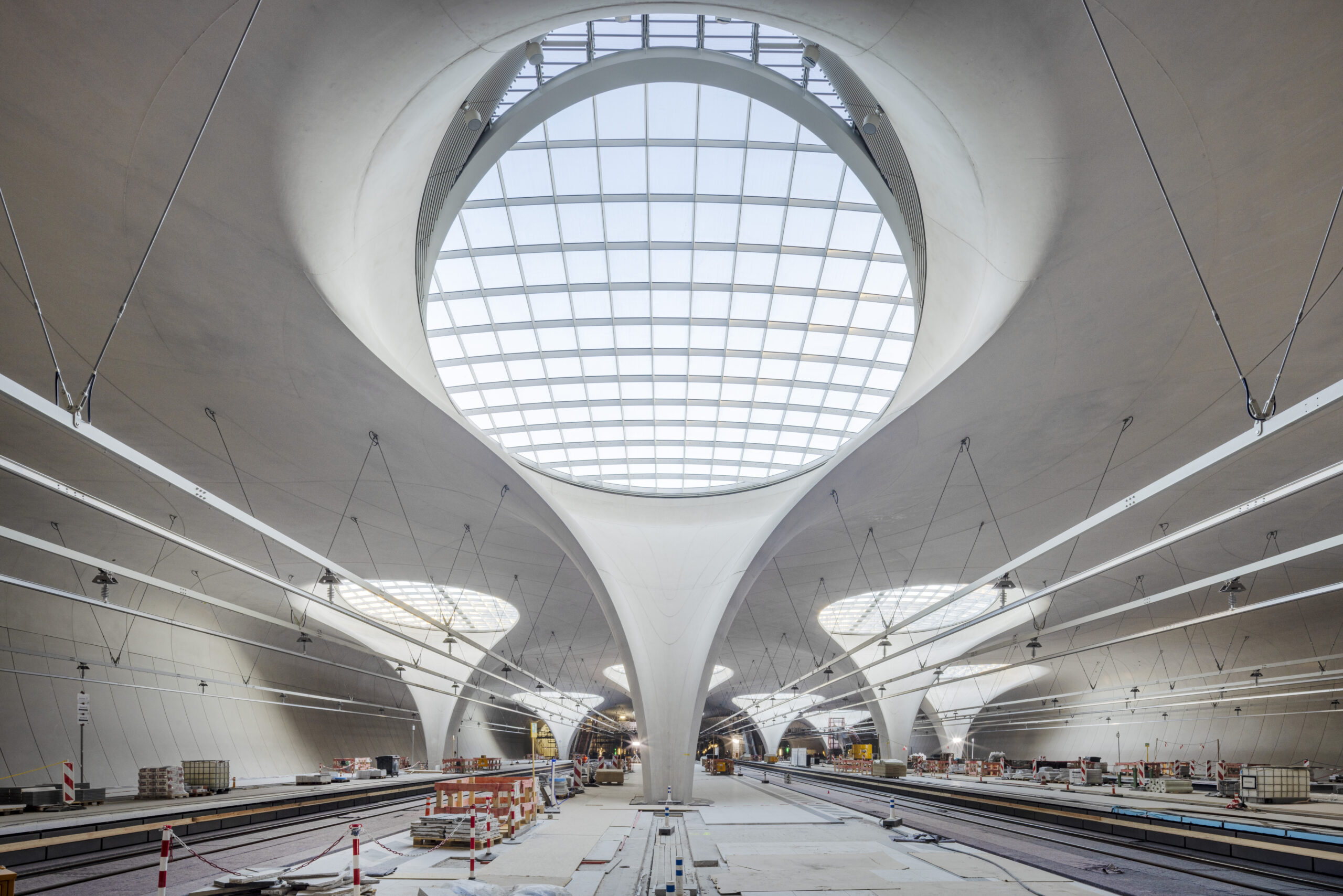
- December 2031: Opening of the new Stuttgart Central Station, with long-distance trains and a large portion of regional trains scheduled to stop at the through station. From 2032 onwards, only trains to and from Bad Cannstatt will be able to enter the through station, with the old terminus station expected to continue to operate for these trains until mid-2032, and, from then, the terminus station becoming obsolete. In spring 2032, the Gäu Railway will terminate in Stuttgart-Vaihingen to allow the new section of the S-Bahn main line to be connected to the existing tracks
- July 2032: The digitisation and extension of both the S-Bahn main line and the Mittnachtstraße/Rosenstein S-Bahn station, improving overall reliability across the S-Bahn
- December 2033: Opening of the Pfaffensteig Tunnel, which connects the Gäu Railway via the airport to the Stuttgart 21 infrastructure
Alongside the project schedule, delays are also affecting the overall financing framework, with DB anticipating additional costs of around 3 billion EUR for the Stuttgart 21 project as a whole, bring its total projected value to 14.5 billion EUR. The majority of additional costs stem from work still required for commissioning.
DB has stated that the main reasons for the development of a new commissioning phase plan include challenges with the digitisation of the railway hub, failures with regards to the planning processes reaching the required level of maturity, the technical building’s lack of suitability, and a delayed response to a change in power supply standards, requiring a complete redesign.
As a result of findings of the audit, DB is committed to a full restructure of its project organisation, both in terms of the organisation as a whole and personnel. The Project Support Unit (PSU) will now centralise both responsibility and control as the commissioning organisation, and risk management will be redesigned with clear escalation channels and close monitoring.
Elsewhere, bottleneck resources will be managed group-wide to identify and counteract delays early on, and coordination with InfraGO and project partners will be further intensified.
DB has stated it will continue to implement the Stuttgart Digital Hub pilot project in all three expansion phases and, in order to minimise unavoidable track closures, the company will seek to combine the construction work, with an optimised rail replacement service set to reduce disruptions for passengers.
Finally, DB will invest in the project in close coordination with the Stuttgart Region Association (VRS), as well as the state, in order to provide high-quality buses, comprehensive real-time information, trial operations, standby buses to reduce disruptions, bus coordinators at bus stops, increased passenger guides and improved equipment at bus stops, as well as new wayfinding signage.