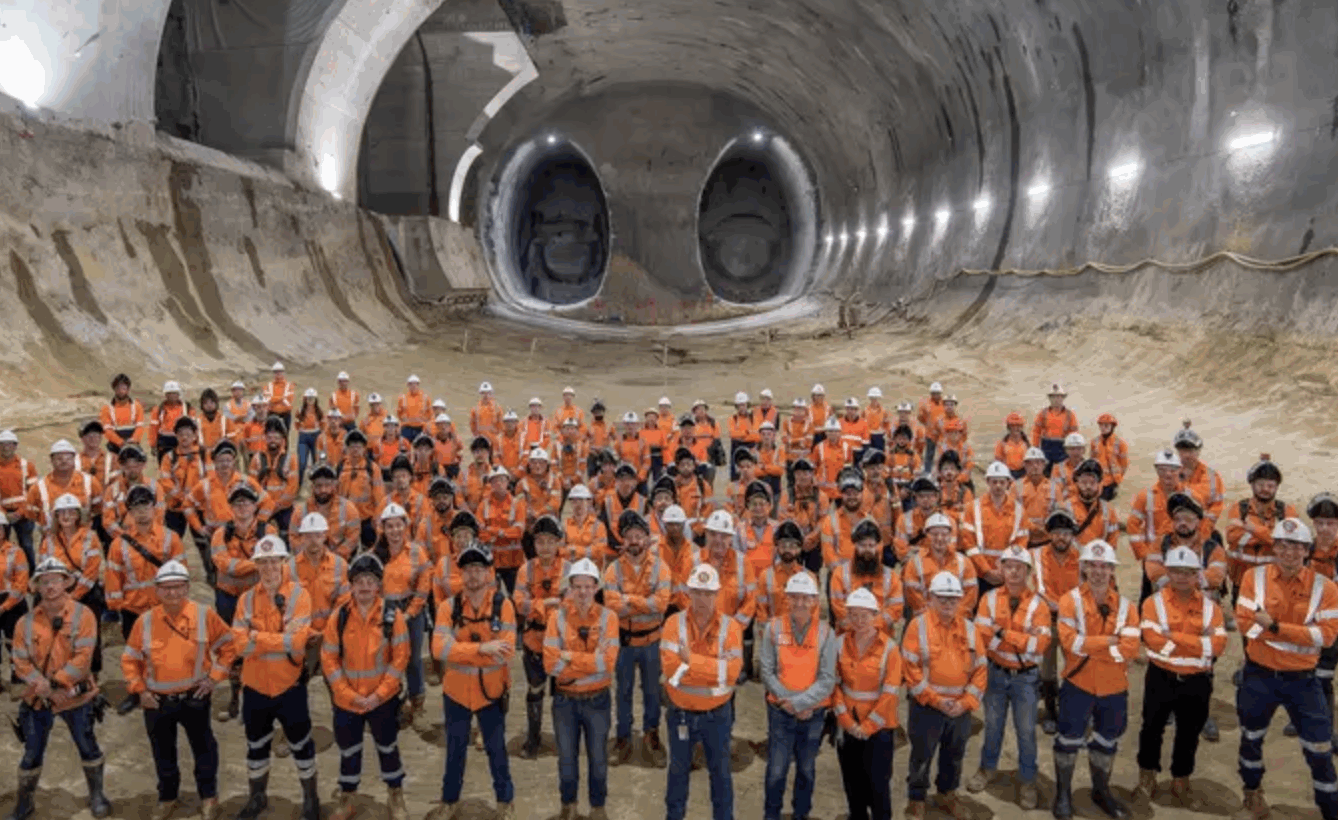
Centralny Port Komunikacyjny (CPK) has completed the launching chamber for Poland’s longest high-speed rail (HSR) tunnel. This marks a significant step forward in the development of the Warsaw–Łódź section of Poland’s new HSR network.
Located in the Retkinia district of Łódź, the chamber will serve as the starting point for a tunnel boring machine (TBM) that will excavate a 4.6 km underground connection beneath the city.
The works form part of railway line No. 85, which will link Warsaw and Łódź and serve as a central segment of the wider “Y-line” project extending to Wrocław and Poznań.
Retkinia Chamber
Measuring over 180 metres in length and reaching depths of up to 23 metres, the Retkinia launching chamber has been constructed with diaphragm walls extending down to 43.5 metres.
The chamber is designed to house the TBM that will bore a single-tube tunnel accommodating two tracks for bi-directional traffic. Excavation is planned to begin by the end of 2026, with the line expected to become operational in 2032.
Construction required the excavation of approximately 84,000 cubic metres of soil and the use of nearly 30,000 cubic metres of concrete. Around 3,000 tonnes of steel have been installed. At peak activity, close to 100 workers were on site, supported by heavy machinery such as cranes, piling rigs, and concrete mixers.
The structure includes two underground levels: a technical systems area on level -1 and the track bed on level -2. Stairwells have been incorporated to provide emergency egress routes. The chamber is currently undergoing technical inspections.
Ongoing Works at Łódź Fabryczna
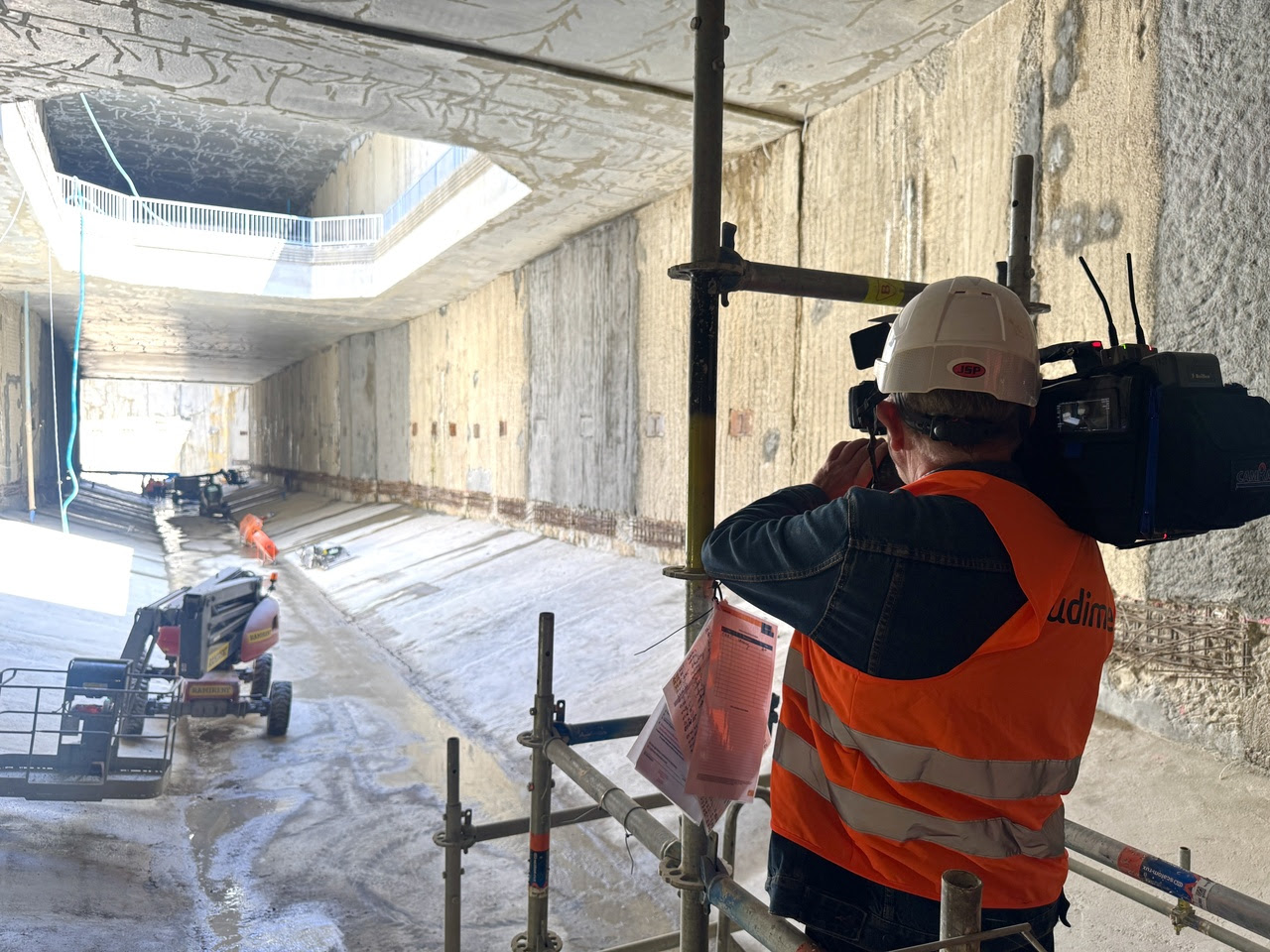
Meanwhile, contractor Budimex has commenced construction of the receiving chamber near Łódź Fabryczna station. This site will serve as the endpoint of the TBM drive and will later be used for disassembly of the equipment. Work on the chamber began in April and includes 1.5 metre thick diaphragm walls forming a 22 by 30 metre structure, excavated to a depth of 26 metres.
A jet grouting wall has been built to separate the future HSR tunnel from existing PKP PLK commuter infrastructure. Further work is ongoing on an anti-filtration barrier and jet grouting plug, with concrete and steel elements being installed to stabilise the excavation.
A turnout chamber is scheduled to follow once reinforcement of the nearby Łódź Cultural Centre is finalised.
In preparation for the tunnel’s arrival beneath sensitive urban areas, the historic Łódź Cultural Centre has also undergone a programme of foundation reinforcement. This includes the installation of approximately 1,400 micropiles and jet grouting columns to stabilise soil and transfer structural loads to deeper layers. Steel bracing is being added in key sections of the building, and interior areas are being reconstructed as works progress.
Tunnel Design
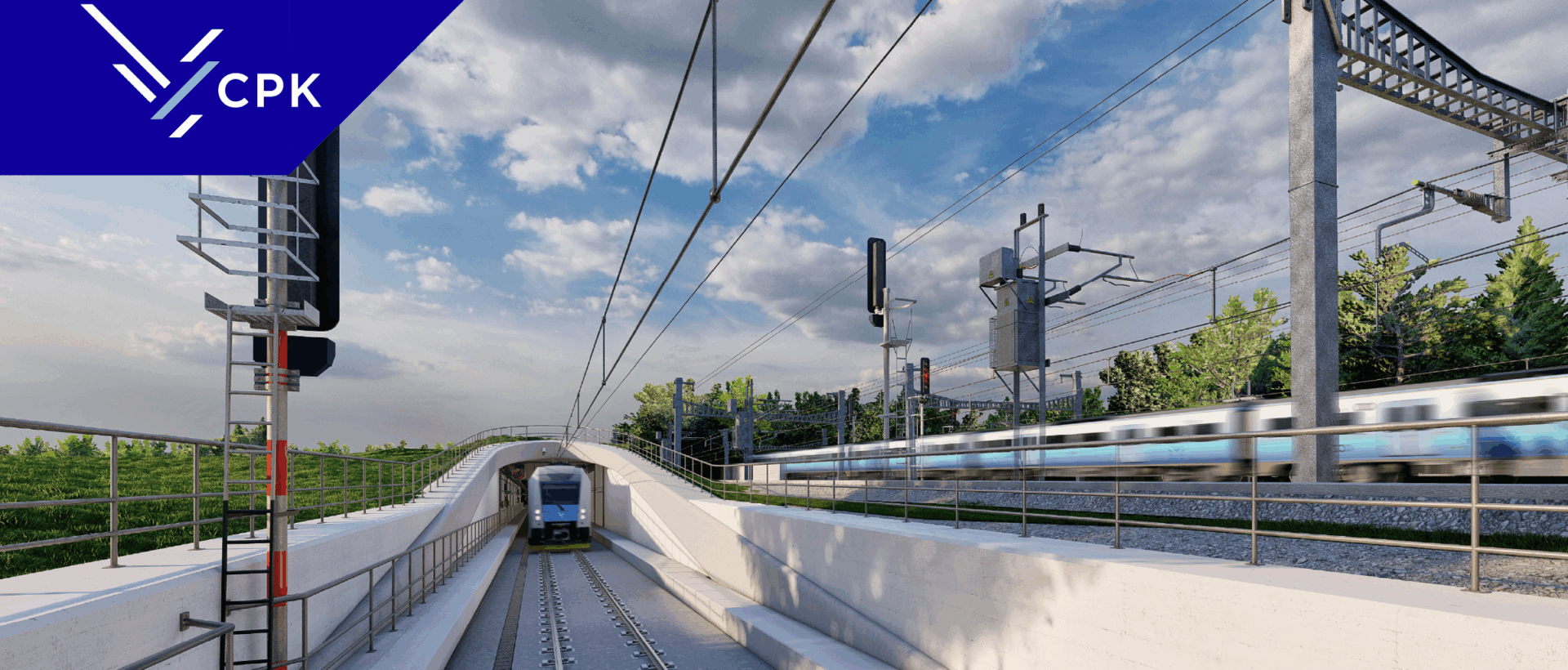
Once complete, the tunnel will be the longest and widest single-bore rail tunnel in Poland, with a diameter of 14 metres. It is designed to accommodate two-way HSR traffic travelling at speeds up to 160 km/h. Tunnel depth will vary between 23 and 34 metres along its length. Safety features will include five underground evacuation chambers, technical walkways, and systems in line with European safety standards.
The Łódź section of Line 85 is currently the most advanced part of the CPK HSR programme. The full “Y-line” corridor, which will span around 480 kilometres and connect Warsaw, the future CPK airport, Łódź, Wrocław and Poznań, is scheduled for phased completion by 2035.