Concrete sleepers in railway construction are a product that stands more for continuity than innovation. However, things are changing. In this interview, Wolfgang Hölzl – Engineering, Design & R&D Sleeper at voestalpine Railway Systems – tells us why sleepers are more than just a simple piece of concrete and what the sleeper of the future looks like at voestalpine Railway Systems.
Mr. Hölzl, first of all – what role does the concrete sleeper play in the system and what basic requirements must it meet?
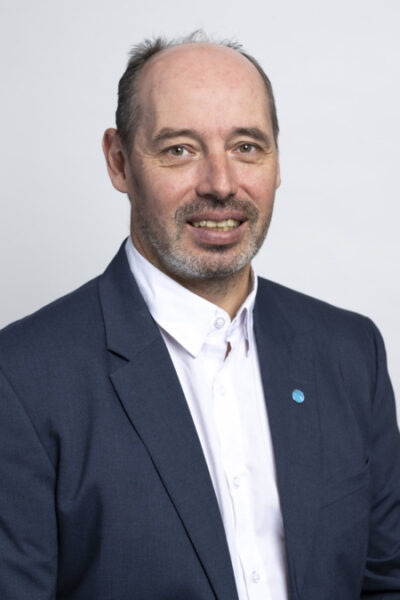
Wolfgang Hölzl, said:The sleeper is the central connecting element between the rail, the fastening system , and the ballast . Its most important function is to safely transfer the vertical loads from train traffic downwards into the ballast. A second fundamental function is the lateral stability of the track. Temperature fluctuations—especially in summer—create stresses that can cause the track to buckle laterally. The sleeper, with its resistance to lateral movement, ensures that the track remains stable, does not deform, and that the train cannot derail. It is therefore a safety-critical component that holds the track and rail in position.
What advantages do concrete sleepers offer compared to other materials?
Compared to wood, steel, or plastic, concrete has established itself as the most durable and sustainable material for railway sleepers. Concrete sleepers can last up to 50 years and are highly resistant to environmental influences. They also have low thermal expansion , which is beneficial for track stability.
Wooden railway sleepers, on the other hand, must be impregnated to ensure their longevity. Previously, substances considered harmful to health and banned in the EU were used for this purpose. Furthermore, tropical hardwoods were frequently used, which is no longer acceptable for climate protection reasons.
Steel sleepers are primarily used in industrial areas, but have a worse CO2 footprint and do not achieve the same stability as concrete. Plastic sleepers are a niche product, mainly used where low weight is important – for example, on bridges. Their lifespan is similar to that of concrete, but recycling them is difficult.
What are currently the biggest technical challenges for track sleepers?
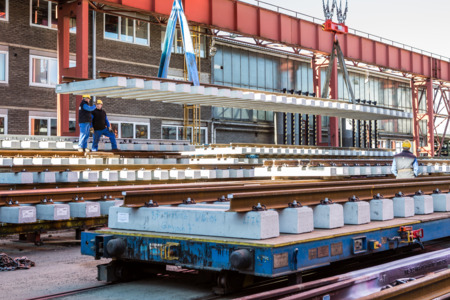
The key challenges are vertical load transfer and lateral track stability . When trains travel over the track, dynamic forces from the wheels act on the rail, which are transferred via the fastenings and sleepers into the ballast. There, they lead to wear and destruction of individual ballast grains – a major cost driver in railway operations, because ballast must be regularly cleaned or replaced. Larger bearing surfaces could distribute the pressure better and thus reduce wear.
However, there are limitations in sleeper design. The dimensions must be compatible with existing track construction machinery, especially tamping machines that compact the ballast beneath the sleepers. These machines operate with fixed sleeper spacings and multiple tamping units. If the sleeper spacing were altered too drastically, they could no longer be used efficiently. Therefore, the challenge lies in achieving the largest possible bearing surface and thus optimal load distribution within these technical constraints .
How does the choice of material for the concrete sleeper affect the overall performance of the track system at voestalpine Railway Systems?
An important aspect is the choice of cement . Traditional Portland cement is very energy-intensive to produce and generates high CO2 emissions . Today, large portions of it can be replaced by granulated blast furnace slag , which is also a byproduct of steel production. This results in a significantly lower – CO2 cement formula , which we also use in track construction at voestalpine Railway Systems. We have taken a significant step towards environmental protection.
What does the increasing volume of traffic mean for the demands on the track system – and how is voestalpine Railway Systems responding to this?
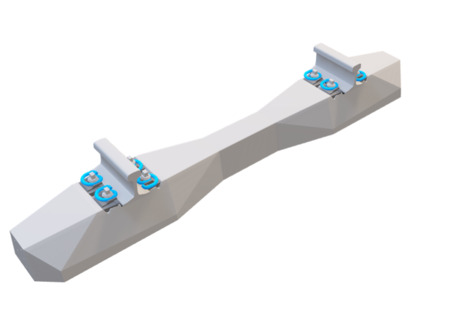
By 2040, traffic volume on existing lines is expected to roughly double. At the same time, track closures and maintenance windows can hardly be extended any further. Therefore, the service life of the entire track system must be significantly increased. Against this backdrop, voestalpine Railway Systems has developed a new, innovative sleeper and fastening system .
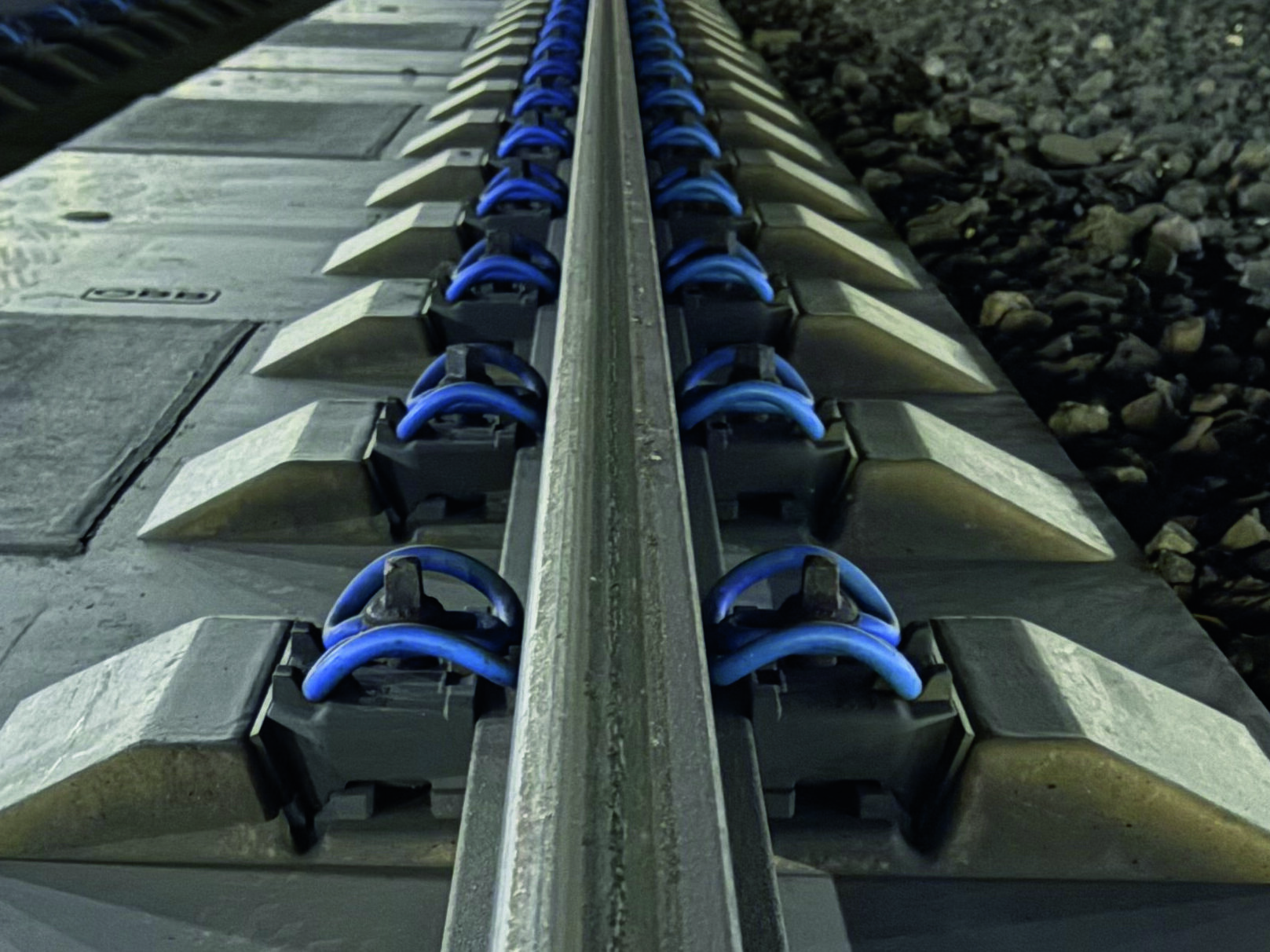
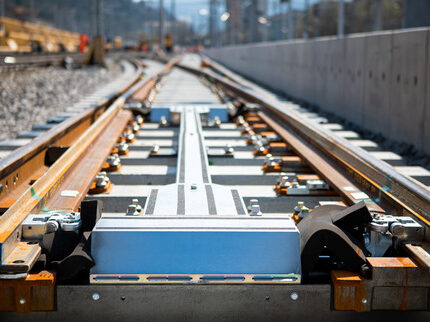
The sleeper shape was the primary focus of optimization. It is significantly wider in the rail seat area and has a larger bearing surface . This reduces ballast pressure and minimizes wear. Simultaneously, the special shape provides higher lateral resistance and thus better track stability than standard track sleepers. The rail seat is considerably larger , allowing for up to four fastening systems per rail. In straight sections, where loads are lower, the system can be installed more easily. In tight curves or particularly stressed areas, the fastening can be doubled.
What technological developments are emerging in the future for the production of concrete sleepers?
In Germany, the traditional direct bonding manufacturing process has increasingly resulted in longitudinal cracks in sleepers. Deutsche Bahn is therefore switching to a process with end-anchored sleepers , in which the tensioning wires are not tensioned before, but only after, hardening. voestalpine Railway Systems has developed an innovative process for this purpose, which is also suitable for longbed production. Deutsche Bahn is already using this process for track sleepers. The conversion for turnout sleepers is planned between 2028 and 2030.
This article was originally published by voestalpine Railway Systems.