WITT CM 7 – Railway Cable Monitoring
The WITT CM 7 is used for the detection of damage to return cable (e.g. RHEYRAIL cables), protection against theft and detection of manipulations for the purpose of cable theft.
Changes to the cable, as well as those affecting the monitoring wires, are identified, and reported immediately. In the event of a fault, localization can alternatively occur by measuring the resistance or the capacitance. The following changes to the cable cause an alarm:
Cable shortening without short circuit between monitoring wire and inner conductor leads to a smaller capacitance between monitoring wire and inner conductor, so that the resulting distance is determined and displayed by using a stored reference value.
Cable shortening with short circuit between monitoring wire and inner conductor leads to a smaller resistance of the monitoring wire, so that the resulting distance is determined and displayed by using a predetermined reference value.
Bridging a monitoring wire. Penetration of liquids into the cable.
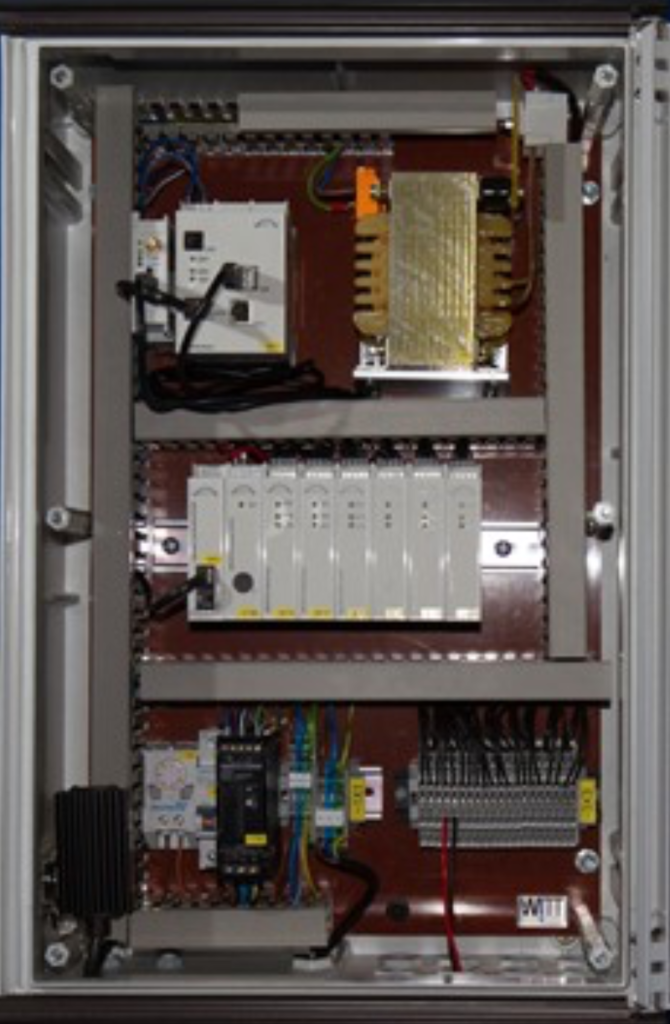
The railway cable fault monitoring devices pass on the WITT Bridge components and have a modular structure. The following modules can be configured for cable monitoring:
- Measuring module WB-CM 7
- WB-HS M for the realization of the visualization, administration and communication protocols