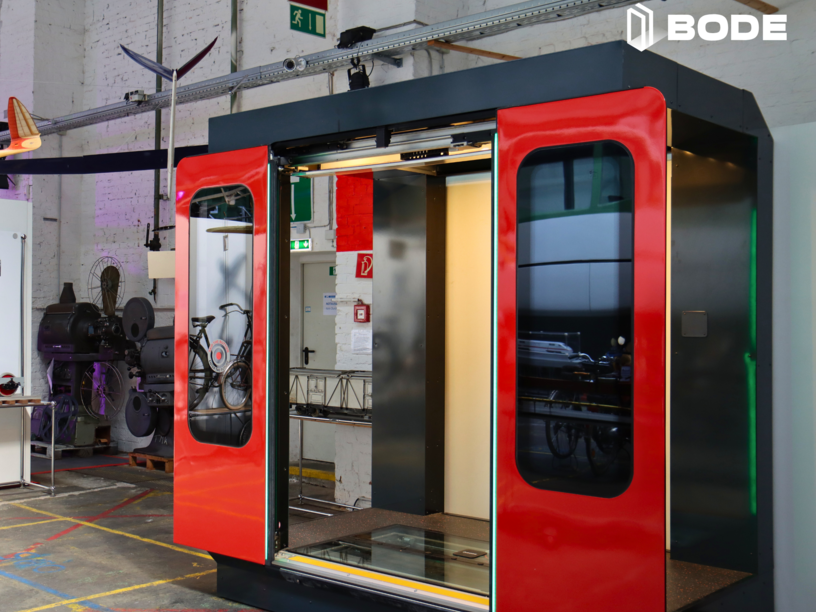
Train doors are more than just an entry point – they’re the first and last interaction passengers have with a service.

Nick Thomas explains how BODE’s latest electronic door technologies are redefining safety, accessibility and reliability across modern and legacy fleets, from intelligent sensors preventing trap-and-drag incidents to fully integrated sliding steps designed for seamless boarding.
Railway-News: Doors are sometimes overlooked in discussions about trains. Why do you see them as such an important part of the passenger experience?
Nick Thomas: The door is a conduit to any passenger travel experience. First impressions are created from the operation of doors and can often serve as an indicator to what lies beyond. This applies to all modes of transport, from buses to boats, planes, trains and automobiles. For Train Operating Companies (TOCs), expectations and perceptions of the Operator’s attention to customer comfort are formed during the opening cycle and determine whether a passenger feels welcome as a paying guest onto the train.
RN: What role do doors play in reliability, safety and dwell times, especially on busy metro networks?
NT: Doors are among the highest cycling components on a train, along with running gear. This means they are highly susceptible to failure and therefore require regular, focussed attention to maintain. Component failure is a source of delays and safety risk, creating increased potential for incident, inconvenience for passengers, financial burden for operators and impact on infrastructure. Door usage is subject to a number of influences in rail travel: – footfall (also dependant on carriage capacity), service scheduling, platform length, amongst other factors. Addressing these influences through precise door monitoring can assist operators by flagging areas for urgent corrective action.
A reliable door system is capable of reducing dwell times, thereby increasing service efficiency. A sensitive door system can provide protection against incident and improve safety of passengers. Our systems offer both.
Innovation in Technology
RN: Door systems used to be largely pneumatic. What advances have you made with electronic systems, and what advantages do these bring?
NT: Pneumatic systems were reliant on measuring the forces which govern the opening and closing cycles. Electronic systems measure the frequencies transmitted by the system, highlighting any deviation to the tolerances set. The electronic system enables greater connectivity in as well as potential to provide real time diagnostics to the driver and operator.
RN: Could you explain the development of your Door Control Unit (DCU) and what improvements the latest generation offers?
NT: The MTB4 DCU offers a number of enhancements over previous generations. SIL2 Safety Standards are met with additional cyber-securities built in to prevent hostile interference with the door operation. A 1k Hz motor current loop ensures fast and accurate control of the drive unit, with possibility of direct connection to sliding steps for seamless synchronisation of the entire boarding system. Diagnosis can also be performed through an integrated web interface as well as other means such as CAN and Ethernet, provided as standard.
RN: How does your BIDS® sliding/swinging system differ from traditional systems in terms of installation, maintenance, or performance?
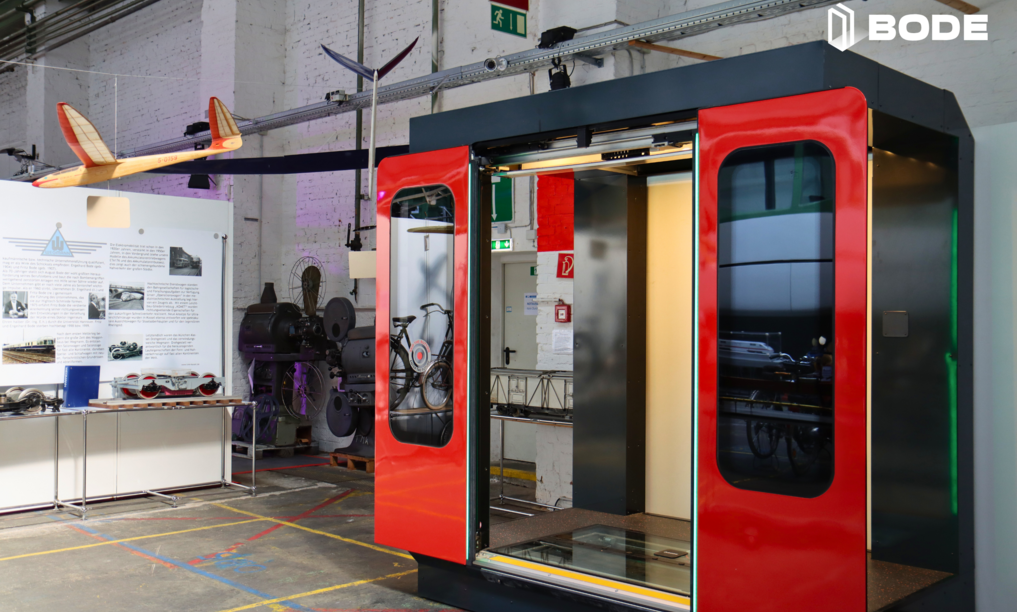
NT: Fewer components and reduced dimensions of the BIDS® drive system mean that the unit is highly adaptable and can be accommodated into even the most restricted header gear space envelope.
Fewer components also reduce wear and fatigue on the system – with recommended major service comprising replacement of the sensitive edge rubbers and less than one hours’ overall maintenance per doorway per year.
The system itself can be tailored to accommodate any existing arrangement within the door portal. As an example of this, mechatronics employed to control the opening and closing of door panels can incorporate the use of guide rails beneath the threshold or, as an alternative, laterally mounted swivel arms. Designs are based on achieving the smoothest, most efficient cycle to operate the doors.
Accessibility and Safety
RN: Beyond the door panels themselves, what additional features (such as step systems) do you provide to improve accessibility?
NT: Accessibility is central to the design of all systems across the portfolio. Sliding steps bridge the gap between train and platform for wheelchair users, prams and strollers using anti-slip treadplates. The BMBS modular step boarding aid system is supported by sensor equipment to detect passenger load as well as the station platform. The system is scalable in line with customer specification to cope with gaps ranging from 150mm to 520mm. Customised boarding aid systems (BCBS) feature folding or sliding ramps and stairs to ensure level boarding across the varying platform heights that we see between stations in UK. A hybrid option is even available, incorporating both sliding step and a ramp extension to add further adaptability.
Other measures to improve accessibility for persons of reduced mobility, such as the visually impaired, can be added to door systems in the form of LED illumination within the glass pane surface. LED strips, as seen on the Merseytravel fleet, are incorporated into the door leaf to deliver clear signals for the opening (green) and closing cycles (red), both externally and internally, and enhancing accessibility for all rail users.
RN: How do your Boarding Management Units (BMUs) and sensor systems enhance safety for passengers and reduce incidents like trap-and-drag?
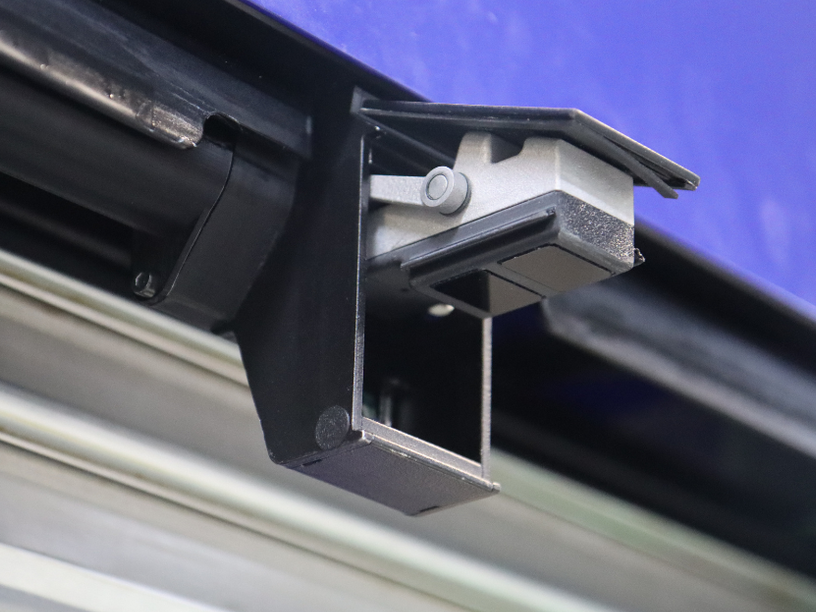
NT: Boarding Management Units add further safety to the portal environment for passengers accessing or departing from the train. The benefits that this system offers are significant, representing total coverage of entrance and exit – gap monitoring, obstacle detection, high resolution imaging, closing edge monitoring – and all with a single sensor that scans internally and externally within the vestibule area. Connected to the door system, activation and response to prevent doors closing is instantaneous, thereby eliminating the risk of trap and drag incidents. In addition, BMU scanning is simultaneously capable of functions such as people, wheelchair, pram or bicycle counting, platform detection, step extension monitoring and hygienic touch-free access using virtual door buttons.
RN: What innovations have you developed in door-edge sensitivity and object detection, and what kinds of incidents do these prevent?
NT: Sensitive Edge, pressure detection, signals and reaction speeds all contribute to prevention of items caught in the closing cycle, incidents of trap and drag, while ensuring that doors are fully sealed prior to platform departure. Finger protection rubber adds further prevention of damage to possessions and passengers, while the male/female profile of the rubbers ensure a tight seal and guarding against elements, such as bad weather, when the doors close.
Retrofitting Older Fleets
RN: Many innovations are built into new trains – but how feasible is it to retrofit older fleets, and what benefits does that bring?
NT: New fleet introduction is a highly complex and costly exercise, fraught with follow up technical works that can cause delay. It is therefore important that TOCs and Rolling Stock Companies (ROSCOs) have the option to extend the life of existing fleets to bridge the lead time until new vehicles can be introduced. Current developments indicate that upgrade to ageing vehicles is possible. Taking account of flex and settle for vehicles in service is a key priority when designing new components to be integrated into the train, allowing for tolerances in portal dimension, obstructions within the existing bodyshell and vehicle structure as well as any damage created by corrosion.
A project beginning this year sets out to demonstrate that retrofit is a real option to inject life into older fleets, not only restoring reliability, but improving cost efficiency in the process. This will involve the replacement of pneumatic door systems with a fully electronic system from BODE, encompassing redesign of the entire door portal to accommodate the enhancements.
Industry Uptake
RN: If the benefits are so clear, why do you think more operators haven’t yet replaced older pneumatic systems with electronic ones?
NT: New partnerships are already being forged from the current door replacement project, and every effort is being made to meet the objectives set. What we could possibly consider a first of a kind for the UK is subject to meticulous design and planning. Efficiencies will emerge over the next couple of years, during which installation will take place, demonstrating to other train operators and those that would like to pursue similar opportunities the viability of such projects.