A new report from the National Audit Office (NAO) has found that whilst the Department for Transport (DfT) and HS2 Ltd are making steady progress in their reset of the High Speed Two (HS2) railway line, both parties must ensure they put the programme on a stable footing in order to avoid previous failures.
DfT reset the HS2 programme, which initially intended to bring high-speed rail travel between Birmingham and the North of England, in 2020, and then again in 2025 following the cancellation of the northern leg in 2023.

As of March 2026; DfT and HS2 Ltd have spent 46.8 billion GBP on the project, with an estimated grand total of 153 million GBP set to be spent on its 2025 reset, which is scheduled to be completed by spring 2027.
In May 2026; DfT updated the estimated cost of the completion of the HS2 programme to sit between 87.7–102.7 billion GBP – almost double the 2020 cost estimate for Phase One of the programme (Euston-Birmingham).
Driving causes behind the majority of cost increases have been attributed to scope change, inefficient delivery and an underestimation of the time necessary to complete the project’s delivery, with further work needed to refine the May estimate and HS2 working toward a ‘more certain and fully assured baseline estimate’ by spring 2027.
Despite cost increases, the DfT has stated that completing the programme would represent value for money when compared to the ultimate cancellation of the programme.
The programme itself is also heavily delayed, with the full completion of the line between Euston and the north of Birmingham not expected until 2040-43 (though services between Old Oak Common in West London and Birmingham are expected to commence earlier between 2036-39) – representing a delay to the full railway opening of around three to 13 years in total.
Recently, DfT announced the decision to reduce the speeds of the trains from 360km per hour to 320km per hour in an effort to both reduce risks and cut costs, leaving HS2 at a similar speed to its European counterparts. It has been estimated that this decision will reduce the delay in delivery times due to the removal of needing to test the railway at the originally proposed speed, as well as save between 1-3 billion GBP.
However, longer train journeys are expected to cause a longer-term loss in benefits of 1.3 billion GBP, which could ultimately negate the savings found in speed reduction.
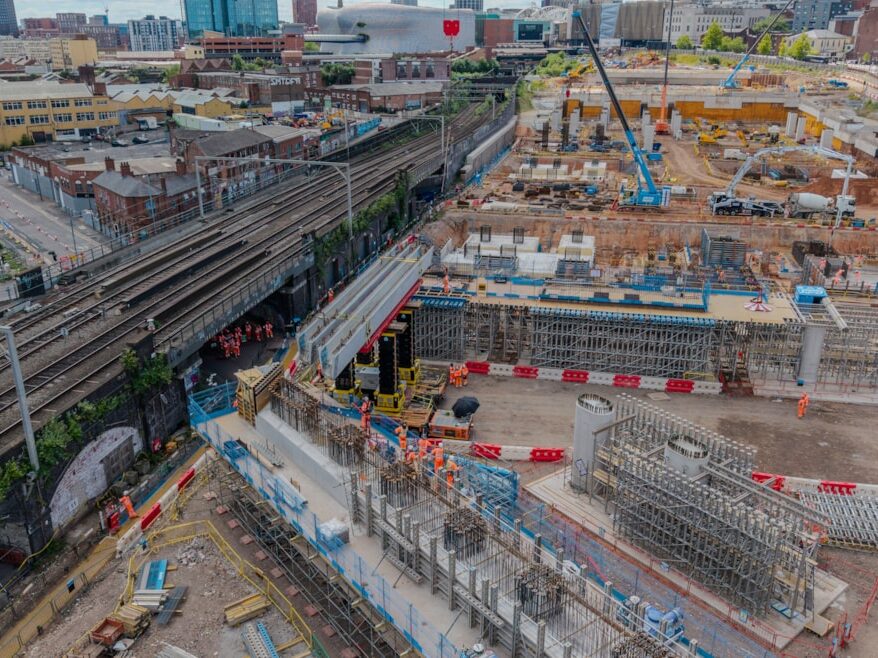
Elsewhere, 3.8 billion has been spent on works at the brand-new station at Euston to date, with another 4.1 billion GBP of public funding expected in order to both create the HS2 station and complete the tunnelling into Euston from Old Oak Common. It has been estimated that the total cost for this will be higher once the private finance the government intends to use to deliver the station is confirmed and included.
The report from the NAO has found that HS2 Ltd is also making efforts to improve delivery as part of the reset by seeking to make savings through a renegotiation of supply chain contracts to better incentivise cost-effectiveness.
In total, HS2 Ltd hopes to save around 2 billion GBP through its approach to the commercial reset by avoiding costs it would incur if work took longer.
The company is also intending to overhaul its organisation after internal reviews found it was poorly structured to deliver the revised programme scope and lacked key delivery and contract management skills.
The NAO has stated that whilst it is clear the DfT and HS2 Ltd are taking a considered approach to resetting the programme, there is still a significant amount of work to do before completion.
In order to aid in the programme’s delivery moving forwards, the NAO recommends that DfT and HS2 Ltd must:
- Review the reset timetable in the autumn to assess whether it remains achievable
- Maintain a focus on cost, schedule and commercial management as they move into the next stage of the programme
- Revisit the governance as the programme moves into the next stages of work to check it remains fit for purpose
Gareth Davies, head of the NAO, said:After facing historic difficulties, including significant cost increases and delays to delivery, HS2 Ltd and DfT are taking a considered approach so far in their latest reset to the HS2 programme.
However, these previous issues highlight the importance of DfT and HS2 Ltd getting it right this time to ensure the future success of the programme. Establishing a fully robust estimate of cost and schedule, completing commercial negotiations and getting the right capabilities in place is necessary before they can complete the reset.
The full report from the NAO is available to view here.