Cambridge South station has officially opened its doors to the public, and is expected to welcome around 1.8 million passengers per year in an effort to transform connectivity across the region.
Up to nine trains an hour will connect passengers to Cambridge city centre, with services also available to London, Birmingham, and Stansted Airport, as well as international rail services via St Pancras, with up to 20 services calling at Cambridge South in peak hours.
Backed by 250 million GBP in Government funding; the new station will offer services operated by Greater Anglia, Great Northern, Thameslink, and CrossCountry.
The station will directly serve Cambridge Biomedical Campus, which currently contributes 4.7 billion GBP to the UK economy each year.
Transport Secretary Heidi Alexander said:The newly opened Cambridge South station cuts journey times, improves access to jobs, and makes everyday life that little bit easier for thousands of people.
This £250 million investment means a journey that once took over an hour - involving a train, a bus, and a walk - is now a single 45-minute direct train from London. That's a real, tangible difference in people's lives.
With up to 20 services in peak hours connecting passengers to London, Birmingham, Stansted, and beyond, Cambridge South will connect people with opportunities across the region and the wider country. This is Great British Railways in action.
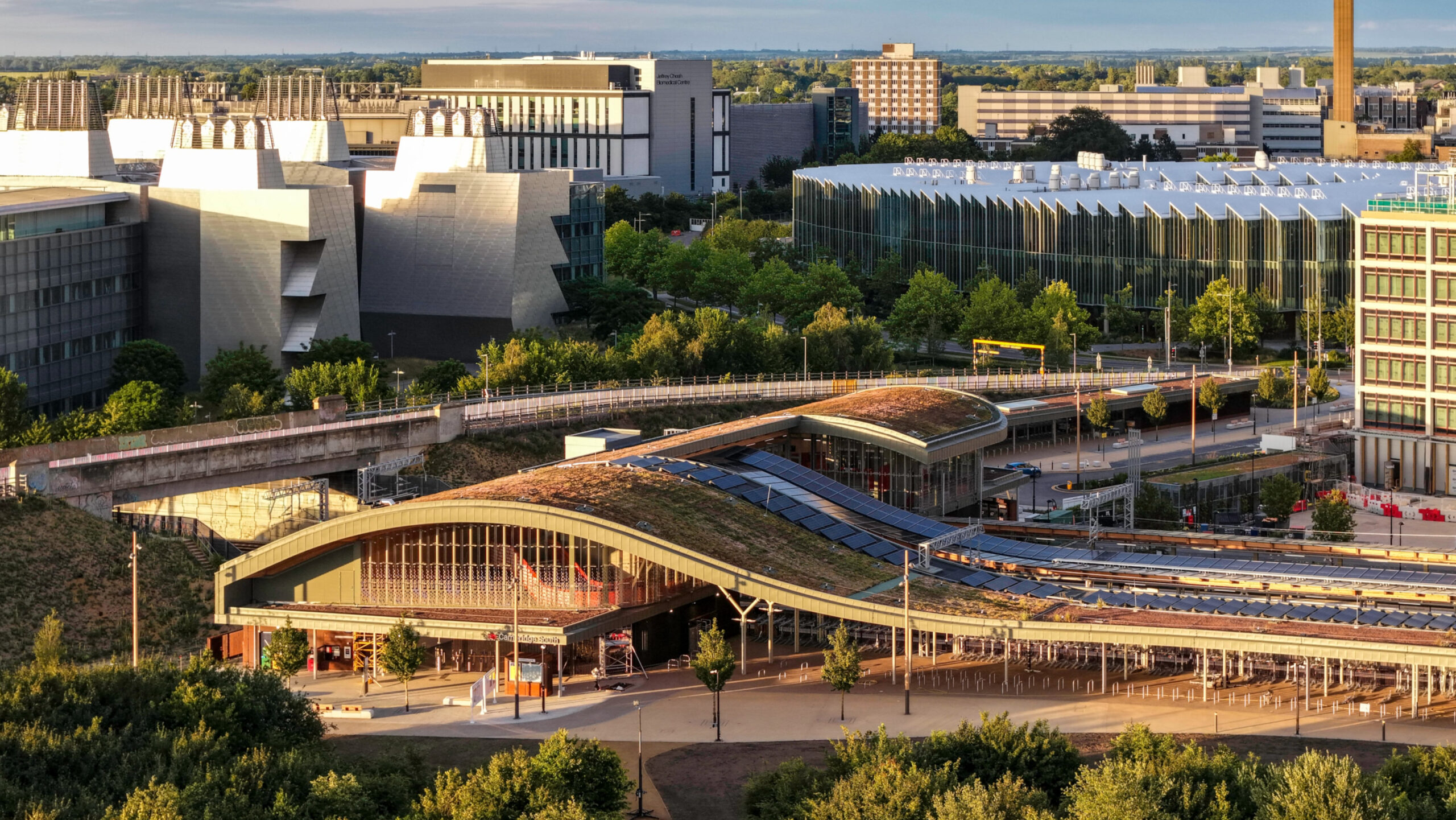
The station has been designed to blend in with its surroundings, and is intended to integrate with the existing Hobson’s Park nature reserve in order to help protect green space, recreational areas and wildlife habitats.
A ‘green roof’ ontop of the station includes a wildflower meadow environment and a rainwater catchment system that will store and slowly discharge rainwater back into the environment and the nearby brook, whilst the station’s overall design and construction efficiencies have reduced the station’s carbon footprint by over 22 percent.
The new station, which will be the first to bear GBR branding, is connected to the local cycle network, and offers 1,000 spaces for cycles, blue badge bays and is located next to the guided busway system.