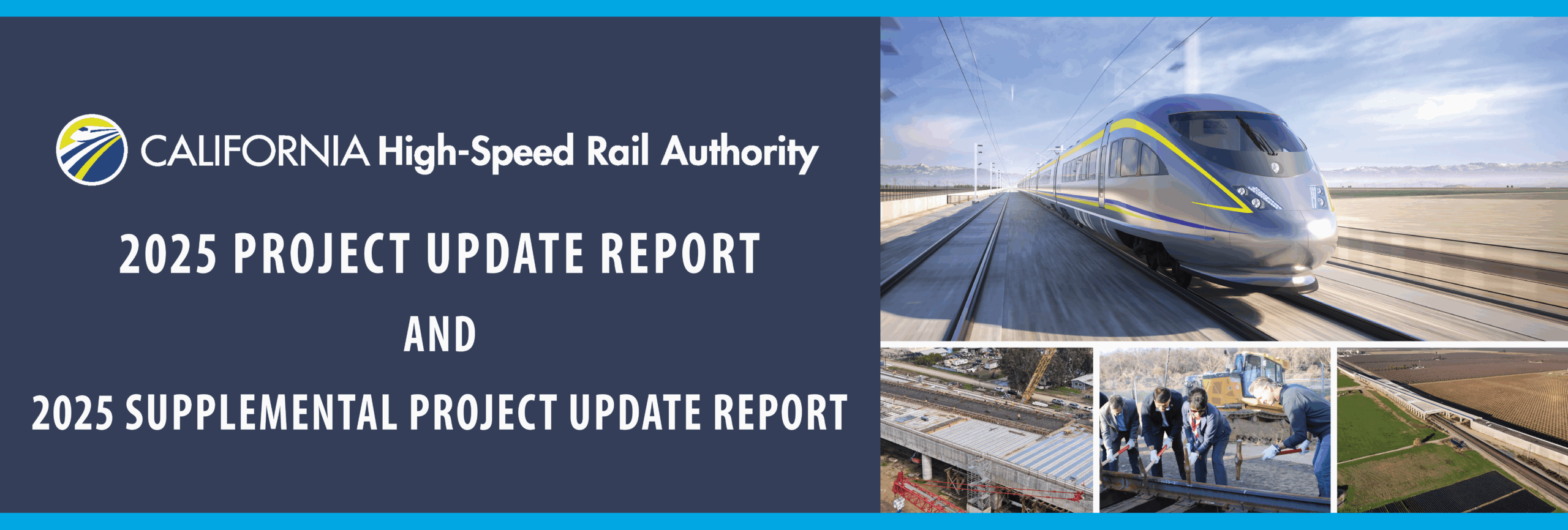
The California High-Speed Rail Authority has released a supplemental update to its 2025 Project Update Report, setting out a pathway to connect the state’s major population centres through high-speed rail.
The plan outlines a phased approach to completing connections to Northern Los Angeles County at Palmdale and to the electrified Caltrain system via Gilroy, while continuing construction in the Central Valley.
According to the Authority, the revised strategy depends on long-term, stable funding and aims to demonstrate commercial viability as early as possible. The approach is designed to generate economic return and enhance the value of the state’s existing investment.
Ian Choudri, Authority CEO said:I see clearer now more than ever the potential for this transformational project, one that can reshape the state and our society for the better. I see a future — by 2038 to 2039 — when operations are already connecting the Central Valley to population centers and innovation hubs, offering new career opportunities, economic mobility, affordable housing, and a cleaner environment. A system that is efficient, sustainable, and equitable. A system that connects us to each other and to the world around us.
The report presents three possible development scenarios, each with revised cost estimates, ridership forecasts, revenue projections, and funding needs:
- Merced – Bakersfield: Completion of the 171-mile Central Valley segment currently under design and construction
- San Francisco – Gilroy – Bakersfield: Extension of high-speed infrastructure from the Central Valley to Gilroy, with enhancements to the Gilroy–San Jose corridor to enable continuous service from San Francisco to Bakersfield
- San Francisco – Gilroy – Palmdale: Further extension southwards from Gilroy to Palmdale, allowing connections with Metrolink services and, via the High-Desert Corridor, to Brightline West services linking Las Vegas and Southern California
The Authority notes that each scenario is contingent on securing dedicated funding streams and emphasises the potential role of Public-Private Partnership (P3) delivery models in advancing the programme.
The report also identifies several actions the state could take to support delivery, including:
- Establishing consistent, long-term funding
- Streamlining environmental review processes
- Addressing permitting and third-party coordination challenges
- Updating state law to provide flexibility in construction
Stable funding, the Authority suggests, could also make the project more attractive to private sector investment and reduce costly delays linked to stop-start construction.
Progress to Date
Construction remains underway on the Merced–Bakersfield segment, with:
- 171 miles under design and construction
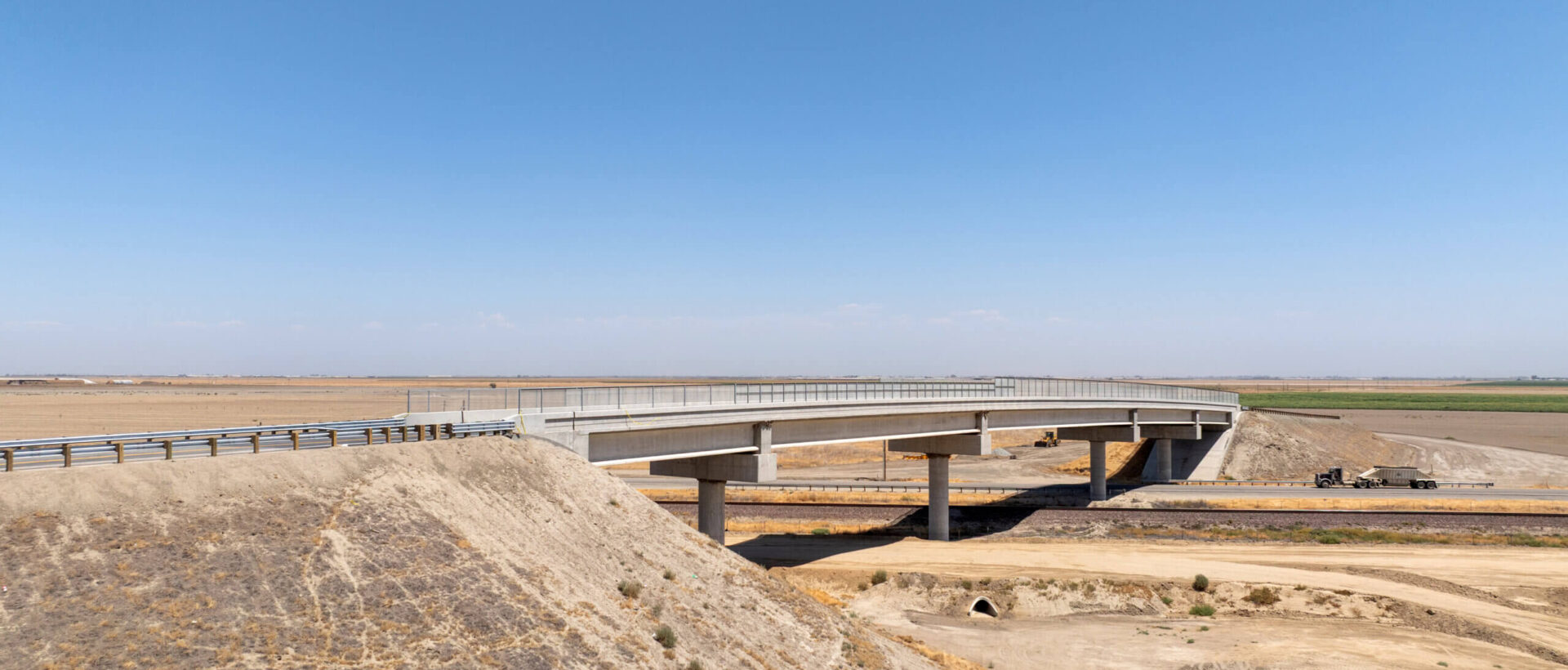
- Nearly 70 miles of guideway completed
- 55 structures fully completed, with 29 more in progress across Madera, Fresno, Kings, and Tulare counties
Since work began, the project has created more than 15,600 jobs, most of them filled by Central Valley residents. On a daily basis, around 1,700 workers are active across construction sites.
The Supplemental Project Update Report outlines how, with stable investment and collaborative delivery, California could achieve phased operations of its high-speed rail system, with a longer-term goal of linking San Francisco to Los Angeles and Anaheim by 2039.