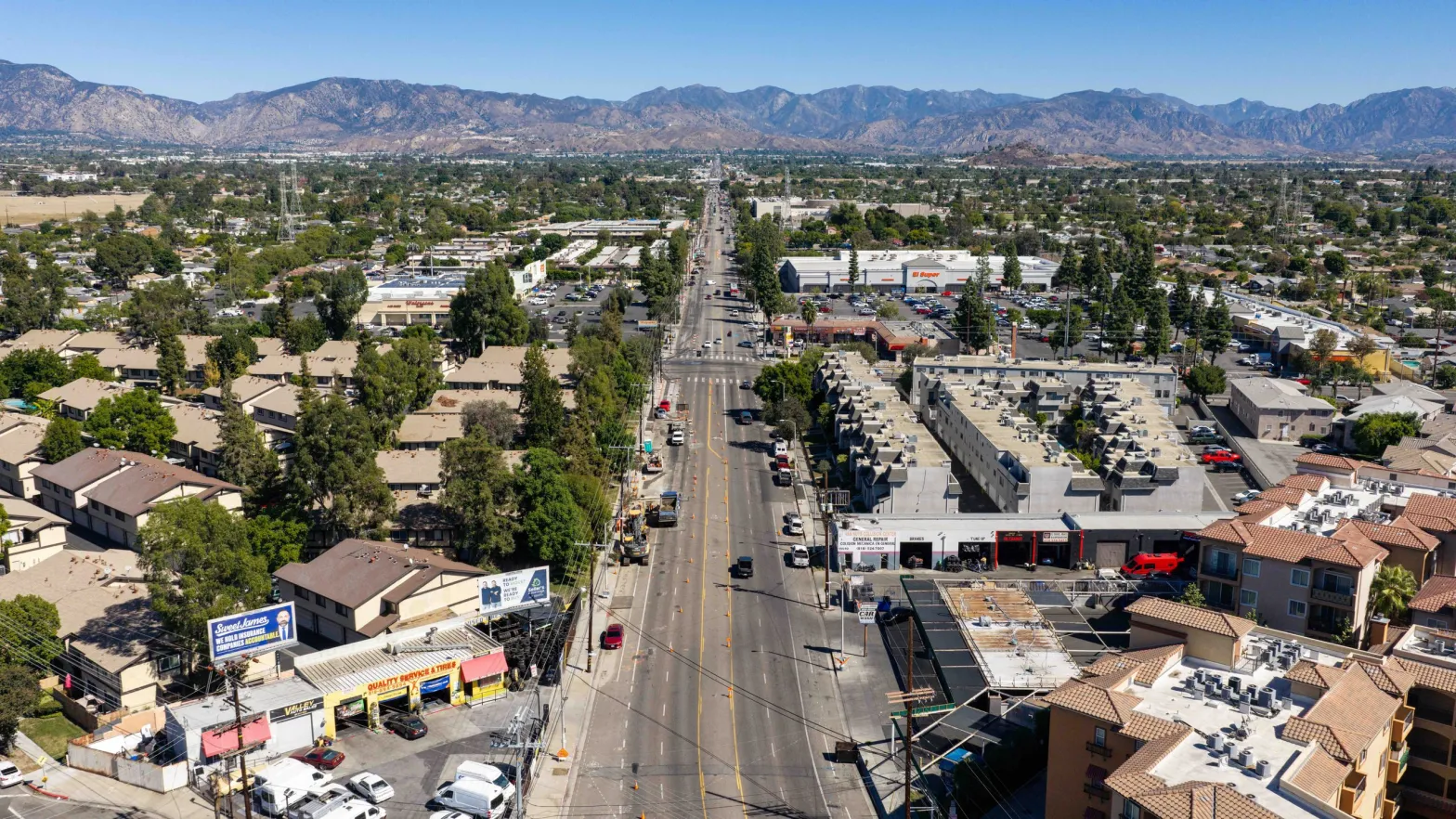
The California High-Speed Rail Authority has completed the Road 26 grade separation in Madera County, marking the 60th major structure finished along the first 119 miles of active high-speed rail construction in California’s Central Valley.
The newly opened overpass, located north of Madera between Club Drive and Avenue 18½, is designed to separate road traffic from both the existing BNSF railway and the future high-speed rail corridor. By removing the at-grade crossing, the project is intended to improve safety for drivers and pedestrians while reducing delays caused by passing trains.
The structure spans 636 feet and carries a three-lane roadway across the rail alignment. Construction involved more than 6,500 cubic yards of concrete, over 1.17 million pounds of steel, nearly 90,000 cubic yards of embankment material and 49 precast concrete girders.
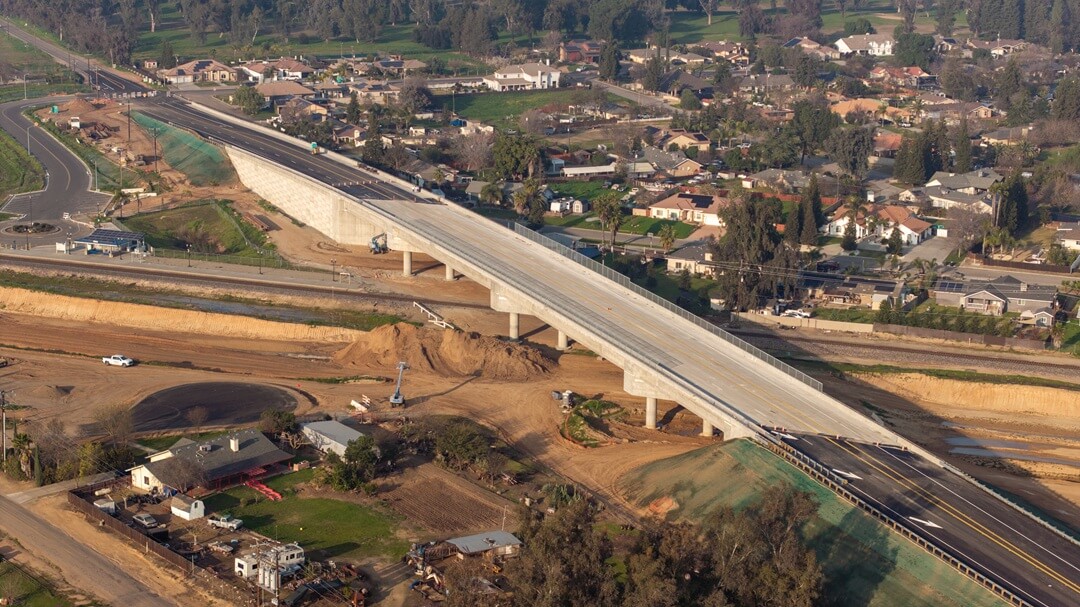
The opening reflects continued progress on the high-speed rail programme that has focused heavily on grade separations and supporting infrastructure across the Central Valley. In Madera County alone, several similar projects have already been completed, including crossings at Avenue 12, Avenue 15, Avenue 15½ and Avenue 17.
According to project estimates, grade separations in Madera County are expected to deliver around 127 million USD in public safety benefits over a 30-year period through reductions in collisions, injuries, fatalities and property damage. The Authority also stated that removing level crossings is projected to prevent more than 600 crashes by eliminating direct conflicts between road vehicles and trains.
Ed Fenn, Chief of Construction for the Authority said:Madera County will see immediate benefits from this new grade separation. Traffic flow along Road 26 will improve, and pedestrians – including students who attend the elementary school less than a mile away - will no longer have to walk across dangerous railroad tracks each day. This milestone reflects the continued support and leadership at the state level, including Governor Newsom, who has helped advance high-speed rail progress in the Central Valley.
Beyond safety improvements, the project is also part of a broader effort to prepare the corridor for future high-speed rail operations while maintaining local road connectivity during construction.
Wider construction activity continues across the Central Valley, where 171 miles of the rail programme are currently under design or construction between Merced and Bakersfield. More than 80 miles of guideway have now been completed, while a further 30 major structures remain under construction across Madera, Fresno, Kings and Tulare counties.
The wider San Francisco to Los Angeles/Anaheim system has also continued advancing through environmental review and site preparation stages. The Authority said 463 miles of the planned 494-mile route have now received environmental clearance.
The project remains one of the largest infrastructure programmes underway in California and has generated substantial construction activity across the state. Nearly 19,200 jobs have been created since work began, with many roles filled by residents of the Central Valley. Daily construction activity currently involves up to 1,700 workers across active sites.
To engage further with the future of the project’s delivery, watch our latest Podcast episode: California High-Speed Rail’s New Delivery Strategy.