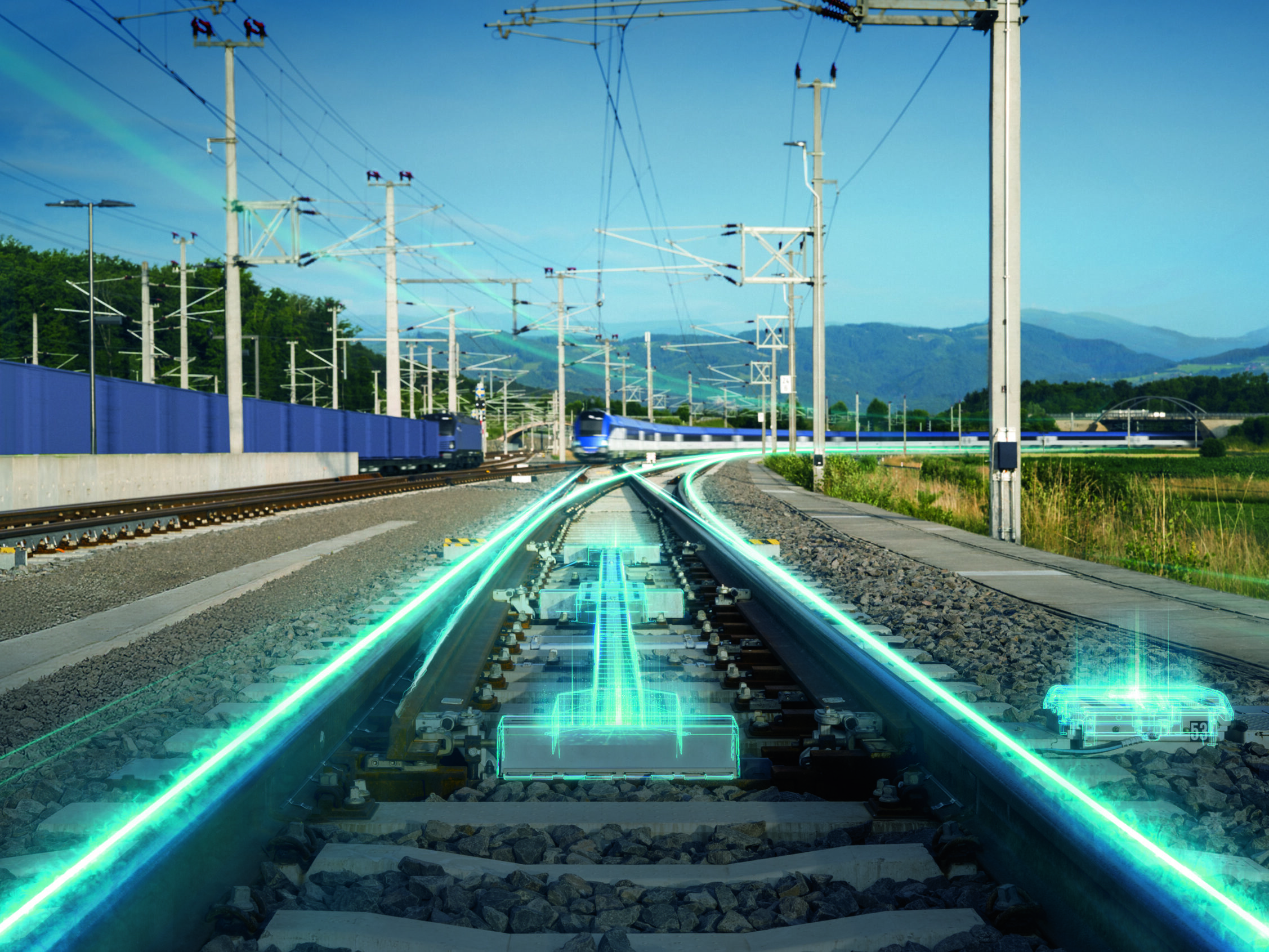
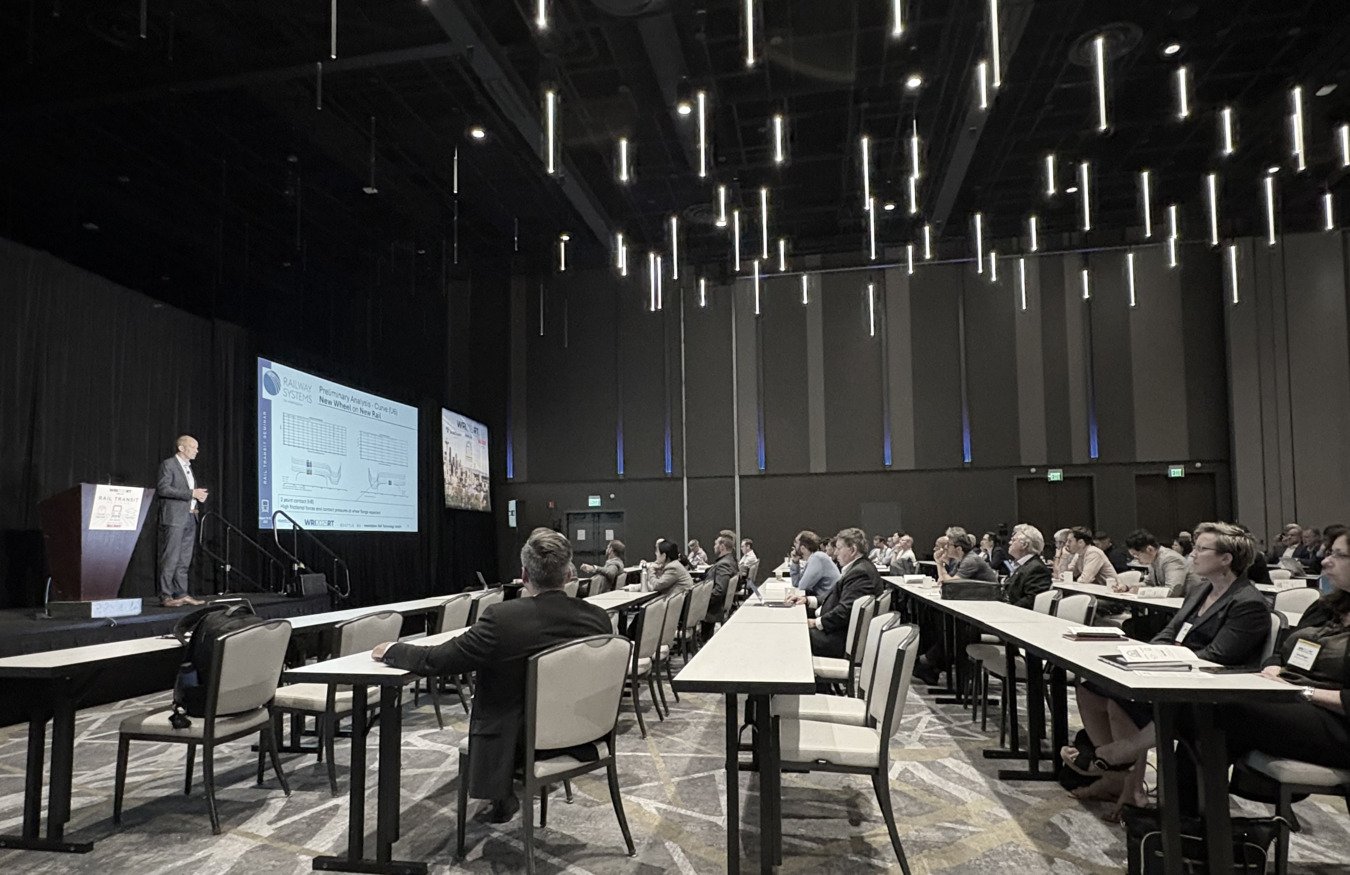
At the Wheel Rail Interaction Conference 2025 (WRI 2025) in the USA, Lukas Prettner, Head of R&D Track Systems at voestalpine Rail Technology, presented a groundbreaking project to improve wheel-rail contact on the Vienna subway line U6.
The WRI Conference is an internationally recognized platform for technical exchange between railway companies, infrastructure experts, researchers, and industry representatives. The thematic focus of this year’s conference series is wheel-rail contact—a crucial factor for the performance, safety, and maintenance of railway systems.
The Challenge: Excessive Wear and Tear in Urban Rail Transport
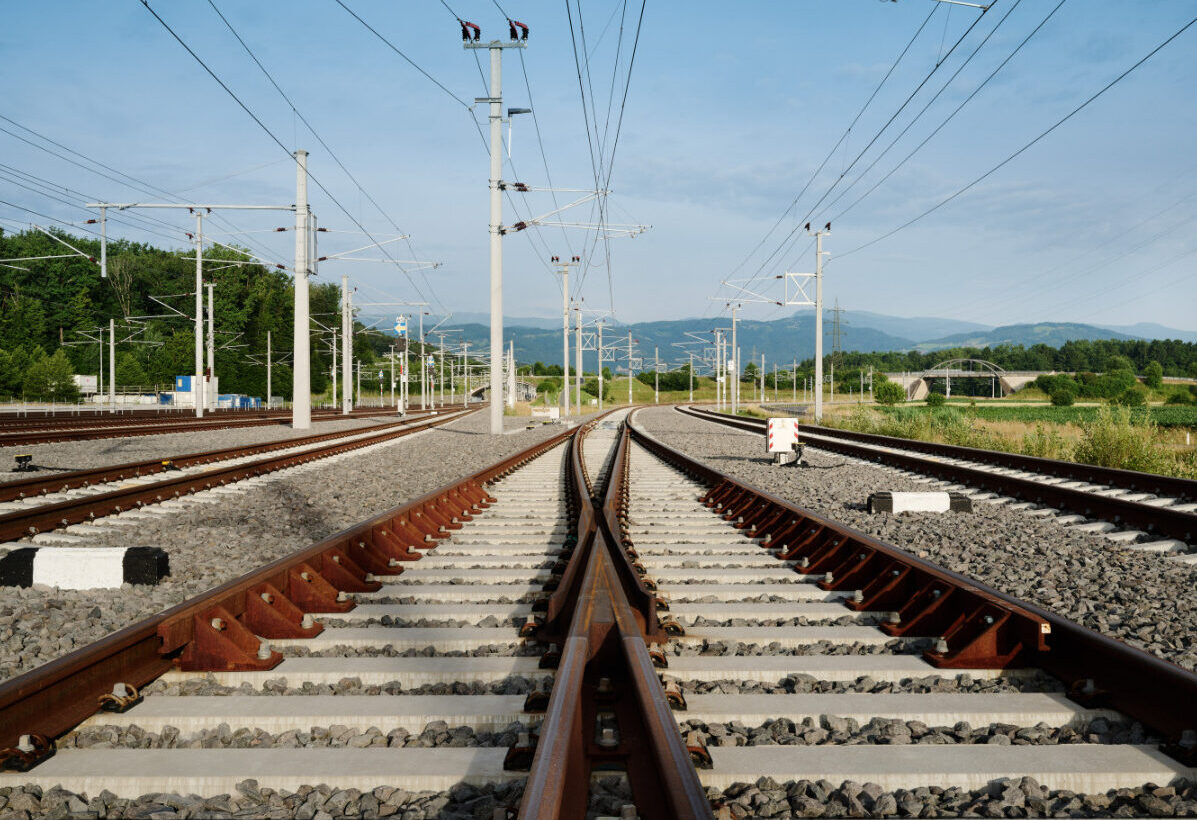
Urban rail systems like the Vienna U6 subway line face particular challenges: tight curve radii, frequent stops, and high passenger numbers lead to increased wear on wheels and rails. This causes rising maintenance costs, noise emissions, and lower ride quality.
The Solution: Combined Expertise for Innovative Railway Technology
The project presented by Lukas Prettner was a joint venture between the following partners:
- Wiener Linien– operator of public transport in Vienna
- PJM– Specialists for measurement technology and monitoring
- Institute of Railway Infrastructure Design (RID), TU Graz– Research and Diagnostics
- voestalpine Railway Systems– global market leader for railway infrastructure systems
Together, extensive measurements, simulations, and profile optimizations were conducted to reduce wear and improve wheel-rail contact.
The Result: More Efficient, Quieter, and More Sustainable Subway Operations
Lukas Prettner, Head of R&D Track Systems, voestalpine Rail Technology said:True innovation arises where operators, science and industry work together – the U6 project impressively demonstrates this.
Results and Impacts
- Reduced wear on wheels and rails.
- Optimized life cycle costs for infrastructure and vehicles.
- Improved driving comfort and lower noise levels.
- Validated methodology for future applications in urban rail transport.
FAQ: Wheel-Rail Optimization in Urban Rail Transport
What is meant by wheel-rail interaction?
Wheel-rail interaction describes the contact mechanics between train wheels and rails. It influences wear, noise, safety, and ride comfort.
Why is optimization important?
An optimized wheel-rail interface reduces wear, lowers maintenance costs, and improves the overall performance and sustainability of rail systems.
What makes urban rail systems particularly challenging?
Urban systems such as subways operate on tight curves and must accelerate and decelerate frequently. These conditions significantly increase the stress on the wheel-rail contact. Typically, there is very little time available for track maintenance.
This article was originally published by voestalpine Railway Systems.