DB InfraGO AG has reported a further increase in construction activity across the German rail network in 2025, with investment exceeding 19 billion EUR.
Compared with the previous year, construction volumes rose across several areas of track superstructure, stations, and signalling systems, reflecting a continued focus on modernisation and renewal.
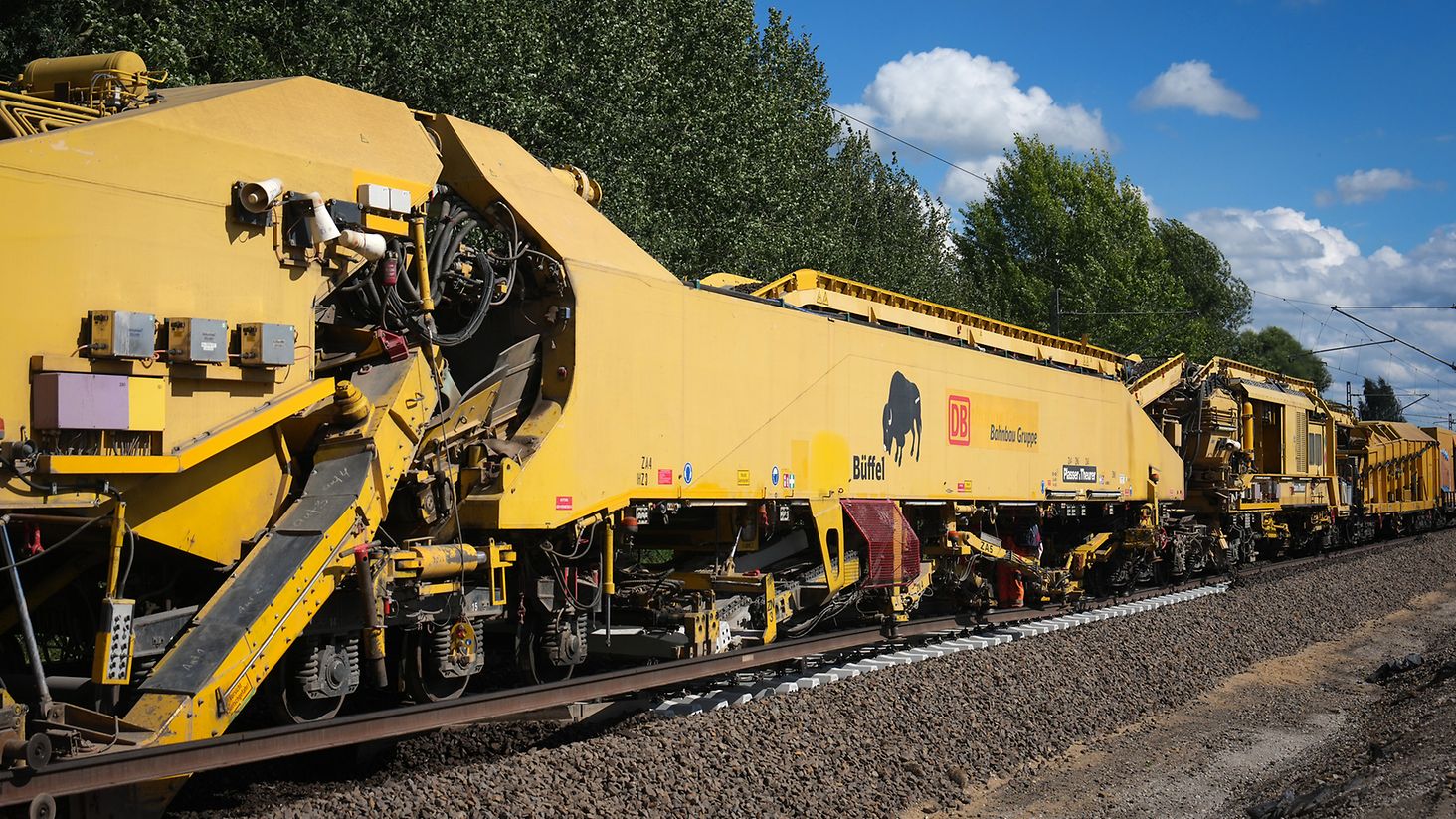
Over recent months, construction work has taken place at around 26,000 sites nationwide. These projects have covered the renewal of railway lines and assets, station modernisation, and the upgrade of signalling and safety technology.
Among the largest schemes during the year were the ongoing corridor renovation of the Hamburg–Berlin line, the commissioning of the Dresden–Anhalt railway, and the recommissioning of the Ahr Valley Railway, which was severely damaged during flooding in 2021.
Dr Philipp Nagl, Chief Executive Officer of DB InfraGO AG said:This year we were able to implement a huge volume of construction work, successfully completing major projects as well as many smaller measures. This is a tremendous achievement by our InfraGO team. For 2026, we have the planning and financial security to continue driving the modernisation forward vigorously. The key challenge remains managing both train operations and construction. We anticipate 28,000 construction sites and at least a consistent operational performance of over one billion track kilometers. By the end of 2025, 530 railway companies, operators, and shippers will be operating on the German network – this record also reflects the attractiveness of rail travel.
Preliminary figures for the 2025 balance sheet show increases in several areas compared with 2024:
- 2,065 switches were renewed, an increase of 2.6 percent year on year.
- 2,173 kilometres of track were constructed or renewed, slightly above the levels recorded in 2023 and 2024.
- 288 kilometres of overhead line equipment were renewed, representing a reduction of around 2 percent compared with 2024.
- Around 40,000 square metres of railway bridges entered service. This is 27 percent less than in the previous year, reflecting the completion of several larger bridge projects in 2024.
- Sixty new signal boxes were commissioned in 2025, compared with around 40 in previous years. The planned commissioning of the new signal box at Cologne Central Station was not achieved. In total, 4,025 signalling units were renewed during the year.
- With the expansion of the European Train Control System (ETCS), the equipped network length increased to 683 kilometres, including 157 kilometres added in 2025.
Station modernisation also progressed during the year. By the end of 2025, DB InfraGO had modernised around 950 of Germany’s 5,700 stations. Where feasible, stations are planned and refurbished as integrated sites, covering platforms, buildings and the surrounding public realm. More than 100 stations have already been upgraded under this approach.
Meanwhile, staffing levels increased significantly in 2025. By year end, around 8,000 new employees had joined DB InfraGO, including more than 3,600 in key roles such as construction project management, construction supervision and track maintenance. Training capacity has been expanded, with 2,100 new trainees starting programmes to qualify as train traffic controllers. As of November, staffing coverage in signal boxes stood at 99.0 percent.
Notable Projects in 2025
Work on the Hamburg–Berlin corridor continued during the year. Five months after construction began on the approximately 270-kilometre route, the track superstructure was renewed, including 165 kilometres of track, 249 switches and five kilometres of noise barriers. New switch connections, crossovers and adapted overhead lines were also installed. Modernisation of signalling and safety systems is continuing, while upgrades at 28 stations along the route are scheduled for completion by the end of April 2026.
Train services resumed on the Dresden railway line in Berlin in December, allowing regional and long-distance services to operate on the new alignment for the first time. Journey times to Dresden and Prague were reduced, and the Airport Express now links Berlin Central Station with Berlin Brandenburg Airport in 23 minutes. Further works between Berlin Südkreuz and Bitterfeld included the installation and repair of switches along a 130-kilometre section of the ICE corridor.
The Ahr Valley Railway was fully reopened following reconstruction after the 2021 floods. On the 29-kilometre route between Remagen and Ahrbrück, tracks, bridges, tunnels and ten stations were restored, modern signalling systems installed and overhead lines added to enable electric operation.
Other completed schemes in 2025 included the four-track expansion between Fürth and south of Bamberg, new build works between Müllheim and Auggen on the Karlsruhe–Basel corridor, upgrades at the electrified border crossing between Bad Schandau East and the Czech border, and the restoration of the historic Elster Valley Bridge in the Vogtland region. The western rail line in Trier was also reactivated, with several new and rebuilt stations entering service.
In addition to major programmes, DB InfraGO delivered more than 30 smaller capacity and reliability projects in 2025. These included new crossover facilities, additional signals, platform works and electrification schemes. Examples include new train protection signals at Frankfurt Central Station, additional switches and signals at Berlin Central Station, a new platform and electrification at Stuttgart-Feuerbach, and capacity enhancements on the Rosenheim–Kufstein line.
Signalling modernisation continued with the commissioning of new electronic interlocking systems, including at Bremen-Burg and on the Munich–Mühldorf line, where systems dating from the late nineteenth and mid-twentieth centuries were replaced. On the Leipzig/Halle–Berlin route, signalling works were completed in preparation for future ETCS installation and higher operating speeds. ETCS Level 2 was also implemented on a section of the Rhine Valley Railway as part of the North Sea–Rhine–Mediterranean corridor programme.
According to DB InfraGO, these activities form part of a longer-term effort to renew infrastructure capacity, improve operational resilience and support future growth across the German rail network.